Different Views of Adoption
One weekday recently, I had sat down to drink my morning coffee and read the newspaper when the phone rang. Doesn't it ring at the most awkward of moments! I expected the caller at that time of day to be someone trying to sell me something. To my surprise, however, a man's voice asked: "Is that Pat McCormack?"
"Yes", I replied, wondering who he was. He didn't sound like a salesman. He wasn't.
"I'm Eric S", he announced. 'Do you remember me?'
Of course, I remembered him but I hadn't seen him since we were in primary school together 61 years ago. "Gosh! Where have you sprung from?" I asked. "Yours is a voice from the dim, distant past".
Eric told me that my sister in New Zealand had written to him in 1979, having been given his address by another old classmate with whom she corresponds. He'd never got round to answering her letter. Recently, when tidying out old papers, he chanced upon it. She had given him my telephone number but not her own. He now wanted to ring her.
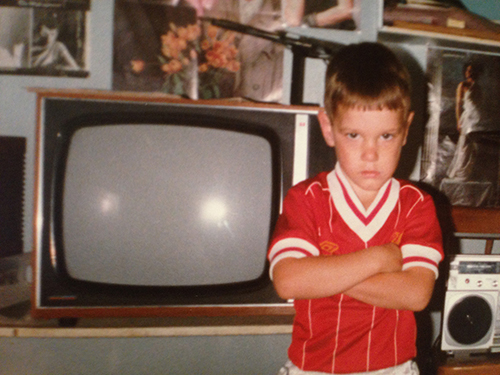
He and I talked nineteen to the dozen for well over an hour. My clear recollection was of an exceptionally good-looking 11-year-old boy, somehow different from the rest of us dull, country kids. Strangely, he lived in a kind of hovel with an odd old couple who had a different surname from his.
He used to cycle about five miles to school every day on a racer bike with turned down handlebars. Any boy owning such a bike in those far off days possessed a glamorous image. As I was a quiet, studious youngster, who wouldn't say 'boo' to a goose I don't think either one of us had much time for the other.
Eric was a real imp, always in trouble, shinning up trees, kicking out defiantly at the teacher if she tried to cane him for misbehaving. He couldn't sit still for two consecutive seconds. However, the teacher was really fond of him and nicknamed him 'Trouble the House'. He had immense charm and spirit.
I never kept in touch with friends from my younger days so I was interested to find out what Eric had done with his life. After leaving school he came to England and got a job, attending night school and working hard to learn to speak with an English accent and to educate himself to a level where he could make something of his life.
At the age of 35 he discovered his real mother and learned the story of his birth and how he came to be in such a place as that small, backward, insular hamlet in the Irish Midlands, being brought up in such incongruous surroundings.
He was born in 1929 in the Workhouse in a Surrey town, to a 20-year old unmarried domestic servant. I don't think he ever discovered who his father was. He was given to a middle-aged Irish spinster who was one of twelve children and whose name he took. When she grew tired of looking after him she took him to Ireland and deposited him with her older sister and the sister's husband.
I asked him what he thought of his natural mother and he said she was a really hard person. He also discovered he had a half-sister but wished he hadn't met her. Anyway, he was glad he'd found out where he came from.
He has done really well in life. In his younger days he ran twice for Britain in the Olympics. He now lives comfortably in Outer London. He has a daughter who is the apple of his eye and a son of whom he is immensely proud. He visits his son every year in Australia. The son was one of the Olympic officials in Sydney last year.
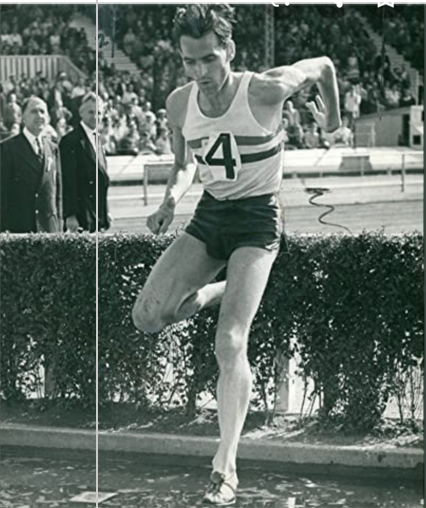
I was strangely disturbed by Eric's story. It surprised me that in 1929 a child could be given away and placed in such an environment out of the jurisdiction of the land of his birth, with no supervision. Eric didn't mind sharing his story and his feelings with me. He showed me one side to adoption. As an adoptive parent myself I listened intently and thought long and hard about the whole, complex question of seeking one's identity.
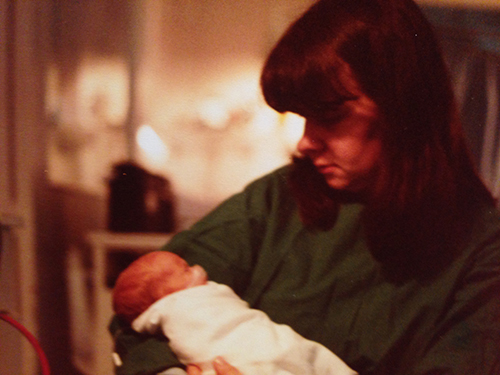
When my daughter was 18 she searched for and found her natural mother. I remember the day she went to meet her in London. She hugged me tightly as I saw her off at the station. She said, "Remember. You are my mother. This woman I'm going to see is a stranger."
I was grateful for her reassurance. What bothered me was my age. I am 23 years older than her natural mother, and I suppose I was feeling a bit threatened and insecure. I probably worried in case my daughter's love for me diminished or she might wish she hadn't been adopted. I needn't have worried. Many times since, Anna has said, "I'm glad you adopted me, Mum".
This reassured me. She also persisted till I agreed to meet her natural mother and the half-brother she discovered she had. This was an emotionally harrowing experience for us. The only thing the two mothers had in common was Anna.
I always made it clear to Anna that she had been adopted and I told her everything I knew about the circumstances of her birth. When she was three, my husband and I went with her for an interview at a private school where we wished to reserve a place for her. We felt we were being put under a spotlight. I settled Anna down with a book and told her to read quietly and let us get on with the talking. We waited for the head nun to speak. This dear lady was very tall and very remote in every sense of the word from little children. At one stage she pointed her thumb down and asked, Does it know it's A-D-O-P-T-E-D?
A little voice instantly piped up: 'Of course, I know I am adopted. My Mummy told me.' I'll never understand how she turned those seven letters into the word. The nun was quite taken aback. So were we. Then came a follow-up remark. 'Look at it, pretending it's reading. I suppose the book is upside down and it doesn't know the difference.'
Mike and I didn't dare catch one another's eyes. We waited, holding our breath, anticipating the response that was surely coming. 'Yes. I can read and my book is not upside down. Look!'
I was beginning to think it was time we took our leave. In my young days little children were 'seen and not heard'. We wouldn't dare speak to an adult without permission. At three years of age this little girl was showing unmistakably that she was my daughter and that she would speak out if she met any injustice! As someone once said to me, 'You know well you couldn't have coped with a wishy-washy child.' Anna has been so right for me.
She and I sometimes joke about her being adopted. I might criticise her in some way and she'll reply, 'Well, that's how you brought me up, Mum!'
Another time she might make a remark and I'll say, 'Not guilty. I didn't give you your genes.' Thus, we add our contributions to the Nature versus Nurture debate!
Never have I thought of Anna as being anything other than my daughter. I feel no different from any other Mum. I felt an instant bonding with her the first time I set eyes on her.
After speaking to Eric, I e-mailed her to tell her about the astonishing phone call. The reply came. 'Amazing! Find out which Olympic events he ran in and in which years. Let's meet...sounds like we have lots in common!'
Eric and I plan to meet in London some day and chat more about the past. Unfortunately, Anna will have gone abroad before she can meet him.
Thinking about losing Anna again for two years, I find myself wondering how a mother can bear to give away the child she gave birth to. I think of my cousin whose parents were married but, because he was conceived before their marriage, they couldn't face telling their Quaker parents about him. His unofficial adoption was arranged in the maternity hospital. He didn't find out till he was in his teens, so it came as quite a shock to him when another child told him that my uncle wasn't his real father.
I wonder how those parents felt and if they ever regretted giving their first child away. Anna's natural mother told her that a year after she'd given Anna up for adoption her parents found out and they were angry with her, not for having a baby, but for giving her away. What really matters, I believe, is that every child is brought up in a loving, happy, secure environment.