Let's Start at the Beginning
Can you imagine the feelings of a devoted mother as she watches her beloved only daughter leaning against a wall in a stressful position in a freezing shed, hooded and stripped to the bare minimum of clothing, enduring 12 hours of torture and interrogation at the hands of a group of masked SAS men?
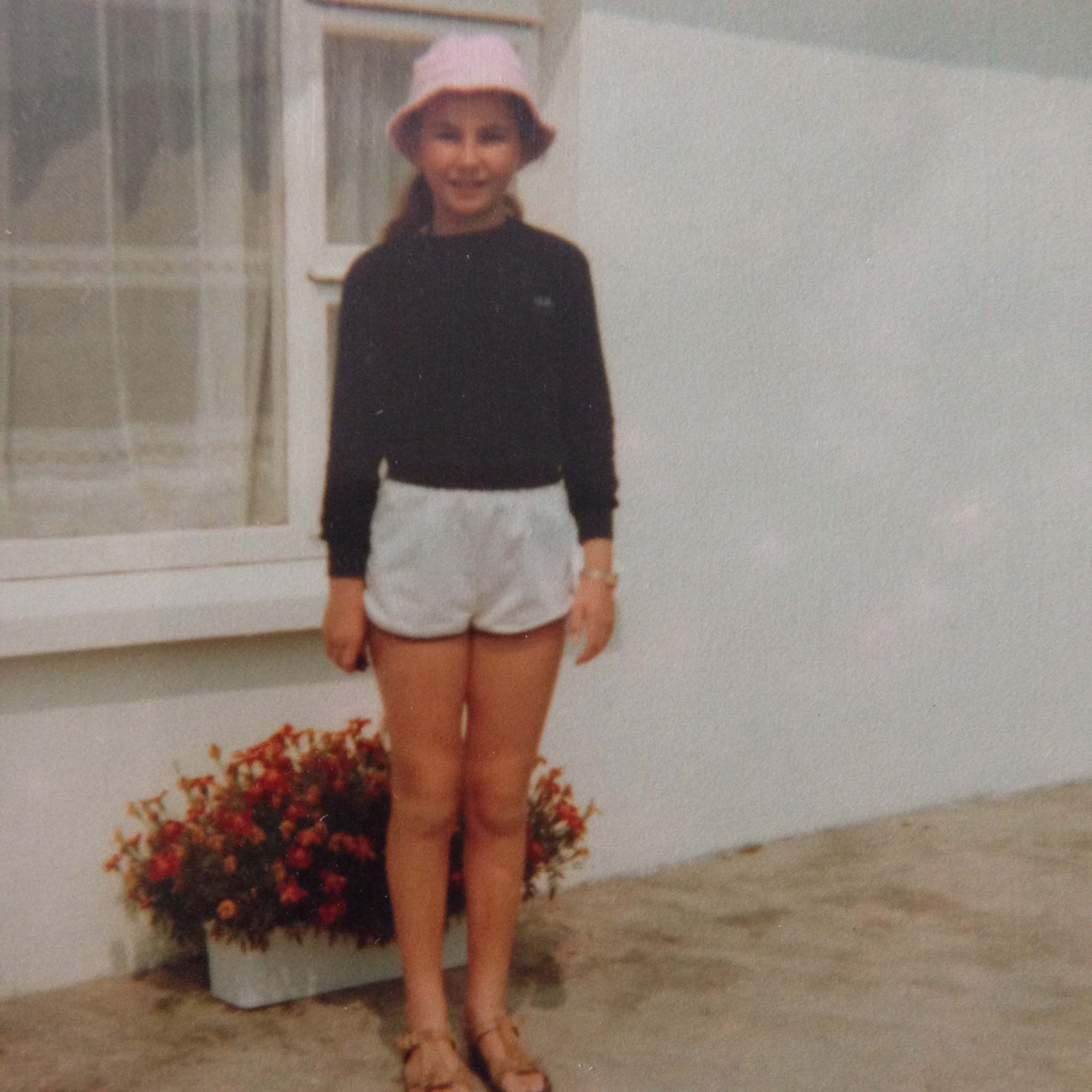
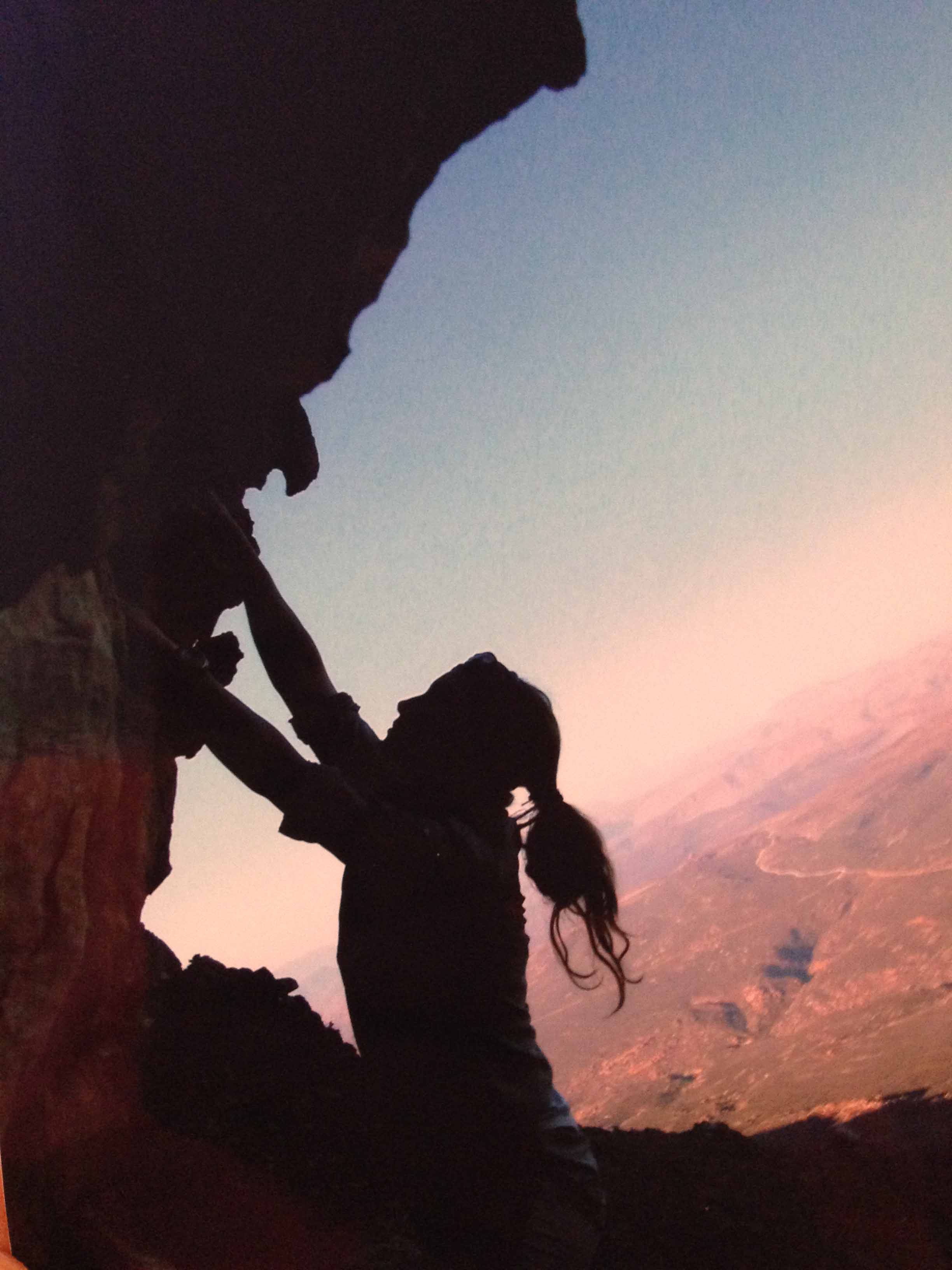
I can tell you what it feels like, because I watched my beautiful daughter, Anna, in just such a situation in the TV Reality show, SAS. Are you Tough Enough? I must say that she was there of her own free will. She could have quit at any time but, I hasten to add, she's not a quitter.
At the time I was simply mesmerised, frozen in a state of unbelief, my overriding emotions being pride, admiration, joy, delight at how my beautiful daughter has turned out. Only afterwards did the horror and doubts strike home.
However, I'm ahead of myself, as what I want to do is start at the beginning and share with you my experiences over the past 36 years as mother to the remarkable Anna, who makes an impression on everyone who comes into contact with her. I need to examine my role in forming this young woman who has been described by so many people as a one-off. I am often asked whom did she take after and, hopefully, an answer to that question will become apparent as I write.
At the age of 78 I am known simply as Anna's Mum but there was a time when I had a different identity and was more of a person in my own right.
Before I introduce Anna let me tell you a bit about myself during the 43 years prior to her appearance in my life. I was born in the hunting-lodge on Lord Bessborough's estate in Southern Ireland on 2nd April 1928 and was christened Patricia Gladys Hartford in the tiny Church of Ireland in Piltown, Co. Kilkenny. My father was the carpenter working on the rebuilding of Bessborough House, which had been burnt down by the IRA in retaliation against Lord Bessborough for his condemnation in the House of Lords of their atrocities. He had been warned not to return to Ireland but after Irish independence the new government undertook the rebuilding of houses like Bessborough.
My parents, too, had been born on estates owned by Anglo-Irish aristocracy. My father had served his apprenticeship under his father on the de Vesci estate in Abbeyleix where his and my mother's maternal grandfather had been the gamekeeper. My parents were first cousins. My mother's father worked as a land steward in Co Wexford for another Anglo-Irish landowner. Both of my parents were themselves descended from English settlers and, at the time of my birth, were very much part of a small minority in a hostile environment, trying to establish their identity during the early years of Irish independence. I thus grew up in an enclosed society of Protestants, kept strictly apart from the mainstream of Irish life and culture, living like a small community of English on Irish soil. As a result of this I would later suffer from a crisis of identity, asking myself, Am I Irish? Am I English? Can I choose which to be? Am I, rather, a member of some kind of non-definable race, Irish by domicile and English in culture and sympathy? I speak with a distinctive Irish brogue but I have lived in England for almost 44 years and no one from my family is to be found in Ireland any more.
Another conflict resulted from living in close proximity to the aristocracy as this gave us a false sense of importance and notions above our station, so to speak. My father spoke with pride of his father's position as clerk-of-works in Abbeyleix and told us of the time Princess May of Tec visited the de Vescis and admired (coveted?) a bookcase made by my grandfather who then made a replica for her and sent it to Sandringham. We often wonder if this piece of furniture has survived.
He also told us that his father, as an apprentice to his predecessor, helped make the doll's house, which has for years been on display in Longleat, family seat of the Bath family, and is a model of the house that was my grandfather's office on Abbeyleix estate. Several members of my family have been to Longleat and have spoken to the previous Lady Bath who was really interested in learning about the origin of the doll's house.
Having been part of such an interesting era in the history of England's involvement in Ireland left my family in a kind of limbo when it ended. My father set up business in 1935 as a wood-carver and ecclesiastical woodworker and his beautiful creations in carved Japanese oak grace many Church of Ireland (Anglican) churches in Ireland. Like his father before him he was a perfectionist, a skilled and gifted craftsman. I remember his pride when, as a tribute to his workmanship, he received an invitation to the opening of the rebuilt Coventry Cathedral. Regretfully, because of ill health and limited means, he had to decline the invitation.
As for me, I wanted something more of life. My dreams went beyond the limitations of the tiny world I was brought up in. From an early age I was a prolific dreamer, an idealist. Being deeply religious as a youngster, I had visions of conquering unexplored lands and claiming them for Christ. When I was older I realised that I had been born into a man's world. At the age of 8 I had within me the seeds of an early feminism. There was my brother, always up to mischief, always in trouble, with no thoughts in his head of wanting to save the world. There I was, carrying within me an urge to be up and doing, achieving fame and setting the world alight, but hampered by being a girl. The Victorian attitude persisted that a girl merely needed to learn how to cook and sew, be a good, submissive wife and look after home and children, not at all my idea of what I wanted to do with my life!
I worked hard at my primary school and became one of the lucky few among poorer girls to win a scholarship to boarding school. Yes, there were poor Protestants and my family were among them and war made us poorer than ever as all the commissions from wealthy English people who wished to erect family memorials in Irish Protestant churches were suspended during the war.
It is difficult to imagine now just how poor we were. One day, in particular, stands out in my memory, which illustrates our poverty. There was no food in the house, not even a crust of bread, and 8 people, my parents and six of us children, were hungry. My brother, Ted, was sent on his bicycle to my mother's sister 22 miles away, to ask her for money to buy some food. She was an assistant-matron of Kilkenny Mental Hospital and was unmarried. It was she who bought our shoes and clothes for us over the years, coming by train to visit us each Monday and Thursday, her days off, and bringing with her several bags of goodies.
Ted was away all day and when he arrived home at 7 pm he had two shopping bags full of food - bacon, eggs, sausages, bread, butter, sugar, tea, jam and much else besides. We were never so glad to see anyone and in next to no time we were all sitting down to the first and only meal that day and eating ravenously. Remembering that period of deprivation, I am smitten with guilt as I think of the amount of food I throw into the rubbish bin these days.
I went on dreaming but, as I grew older, my dreams became less spiritual and more self-orientated. I longed to be a leading philosopher or top financial expert, living in seclusion with my studies or becoming a kind of back-room boffin. I had this great desire to achieve academic excellence, a longing for perfection.
Alas! Dreams shatter. The icy fingers of poverty stretch out and choke them before they can become reality. The necessity to earn a living, to lift oneself out of the degrading and energy-sapping trap of poverty begins to dominate. Resentment and rebellion take root.
Instead of doing what I really wanted, studying Mathematics and Philosophy at university, I found myself destined to go to college and be trained as a teacher, to me a loathsome career and one I wouldn't recommend to my worst enemy. All of this would be financed by a government loan, to be paid back out of my salary over the first five years of earning, a millstone around my neck. These loans were available only to extremely needy students training as teachers for church primary schools, in my case, the tiny Church of Ireland schools.
As Protestants, we had our own schools, training colleges and university. We had the added privilege, moreover, of studying for half a BA pass degree in Trinity College, Dublin, as the academic part of our course. We could complete the degree as external students if we could afford the extra two years' fees. I did this four years later, but my degree, gained in 1953 and without much effort on my part, was a poor substitute for the Honours I had dreamed about. I remember reading Matthew Arnold's poem, The Scholar Gypsy, and longing to go as a student to Oxford.
I fought in vain against the plans for my future. Tears and pleading had no effect and then I asked to be allowed to join the WRAAF just to escape from what I saw as a hideous future, but to no avail. My intellectual yearnings were thus stifled and my faith grew less invincible as I became more and more rebellious and resentful.
Many years later, I would preach a new doctrine to friends, that God was a being created in the image of Man, by Man, for Man, to justify Man's dominance over Woman. I grew to resent the unhappiness and squalor at home and my mother's sad miserable life as a second-class citizen. A suppressed anger against my father and against male-dominated society in general, built up inside me.
My dream became a determination to prove that women are not just as good as men but superior in every aspect. I also carried about with me a huge chip on my shoulder and an angry resentment of the degrading stigma of poverty. All through college I was sullen and uncooperative and I let my brain go idle. I can sometimes detect a similar sullenness in my daughter if she doesn't get her own way! I didn't want to be like that. I craved to be perfect in every aspect.
Looking back, I can see that those two years were, for me, an utter waste but the certificate I received enabled me to take up a teaching post and earn a salary, albeit a very small amount at first. However, the years passed and I made the best of them. I was in my late twenties before I had any money to spare to spend on clothes and on travel.
I married at the age of 31 and choosing an Irish Catholic added to the contradictions in my life. It brought ostracism from one family but not acceptance by the other. I sometimes felt I was living in no-man's land. When Mike and I came to England in 1963, I began, not only to enjoy teaching for the first time, but also to feel I'd come home. My mother died the next year and my father then settled in England, staying with each of his children and his sister, my Aunt Frances, in turn. When he died in 1966, he was buried with my mother in Abbeyleix.
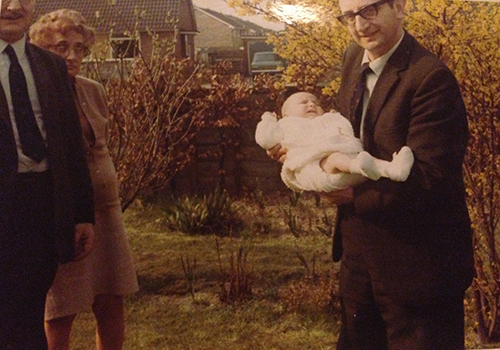
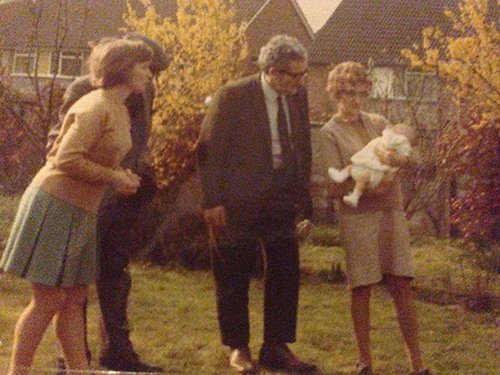
Eleven years after our marriage, my husband, Mike, and I were aware that the years were closing in around us. I was 42 and he was 39, and we were childless. We decided to contact an adoption society but were rejected. We guessed it was because of our age. We tried another society and to our surprise we were accepted. Nine months waiting helped to create a sense of natural birth.
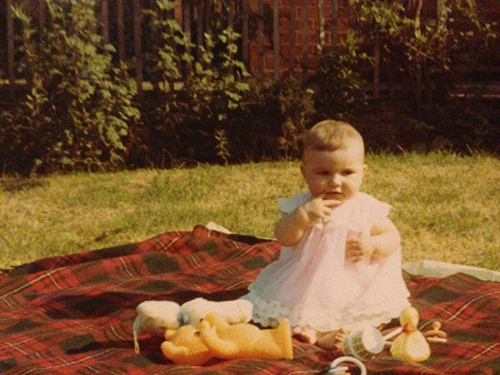
I spent those months preparing for the arrival of my expected daughter, joining other expectant mothers at antenatal classes, even doing relaxation exercises with them. My daughter's arrival would be as near a natural birth as I could make it! From the word go she would have everything I had longed for but couldn't have. She would never suffer the mortification of poverty. Instead, she would be showered with love and she would be the centre of my world. Nothing but the best would be good enough for her. Let's see how it all turned out!