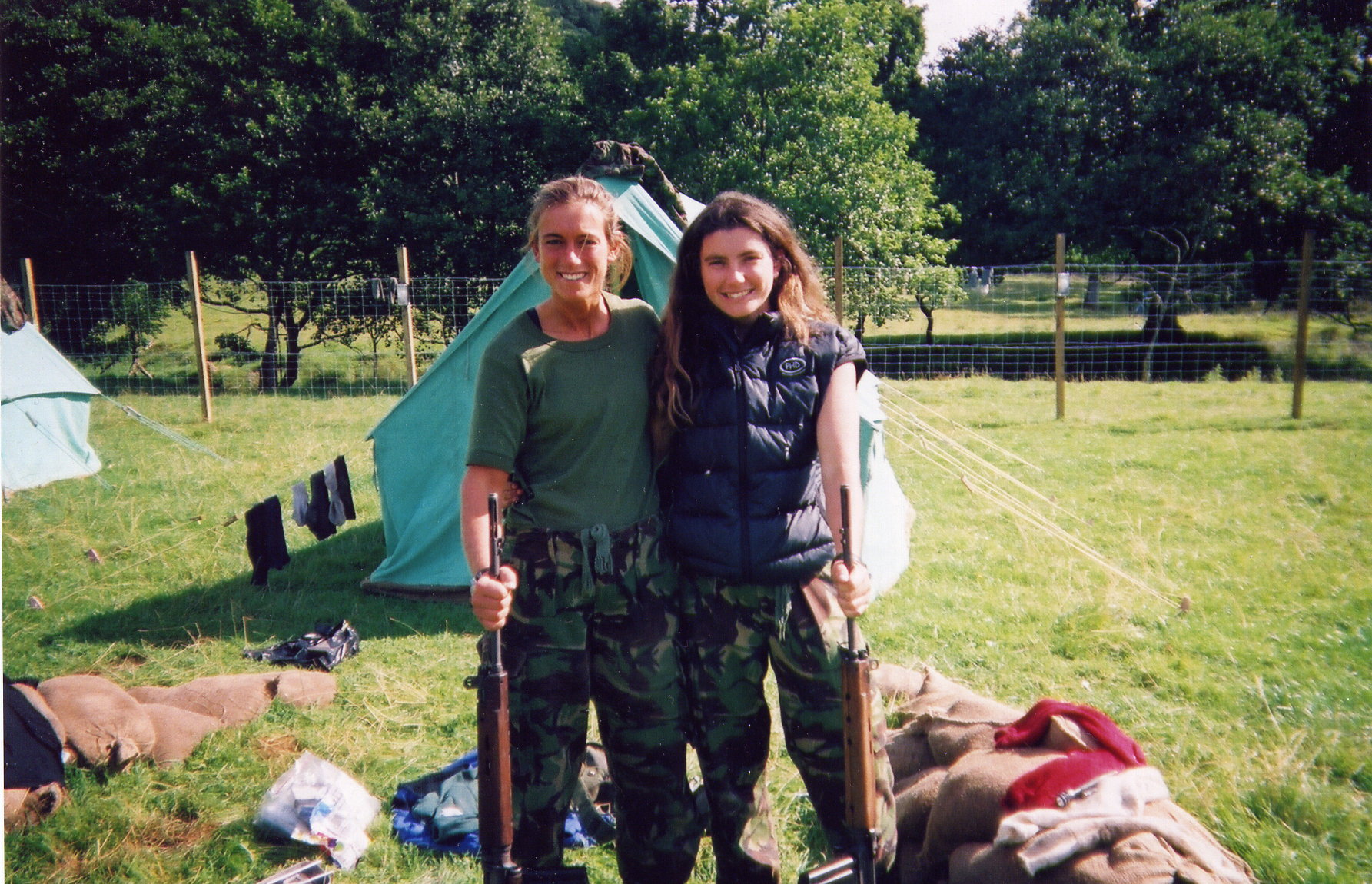
Of Me and my Daring Daughter
It was a question I was bound to face sooner or later. Did I make a mess of my daughter, Anna's, upbringing? Surely, every parent must at some point address this issue. My moment of reckoning came in March, 2002.
A year earlier, Anna had casually announced that she had applied to take part in the BBC Reality show, "SAS. Are You Tough Enough?" I displayed little enthusiasm when she later rang to tell me that she was among the 30 who were chosen from the original 800 applicants to take the SAS selection tests. If she were about to embark on another dangerous, scary adventure, I would be informed only when it was all safely in the past. Therefore, I reasoned, there was nothing to worry about!
In 1995, for example, she joined an expedition on Mt Everest and was almost killed in an avalanche. She rang me weeks later to tell me, announcing that her leg was badly injured. She was so incoherent I knew that what had happened was pretty terrible. I was angry, really angry, so angry that I never again wanted to share in her adventures.
Why was I so angry and not merely relieved that my beloved daughter was alive and safe? Was I angry with myself for always encouraging her to go out and seek adventure and live her life to the full? Was I angry with her for going without telling me?
The anger, I think, was really a manifestation of shock, and a realisation of what could have happened. At the time that Anna's group were in trouble on Everest, Alison Hargreaves was killed on K2. While reading about Alison, little had I known where Anna was.
News of the SAS selection tests, therefore, caused me little or no anxiety. It seemed to me as innocuous as the minor part Anna had played in a film, earlier. It was purely an acting role, nothing to be concerned about, tame when compared with her usual exploits.
The planned tests and filming had to be postponed twice, because of the foot and mouth outbreak. Dates in September were finally set, and the location was to be the Scottish Highlands. Unfortunately for Anna, the dates clashed with the World Adventure Racing Championships in Switzerland. As a member of the top British team, she had been looking forward to her last adventure race before moving to a new post in Namibia.
There was much procrastination and seeking of advice. I felt unable to offer any cut and dried solution. I knew how much she had set her heart on going to Switzerland. Equally, I knew that it had long been an ambition of hers to prove that women were tough enough for the SAS.
Nick Crane, her hero from her teenage years, advised her to accept the BBC offer. He pointed out that there would be other championship races but that the BBC programme was a one-off chance. I applauded his advice. It was really what I had wanted Anna to decide for herself.
She rang me during the second week of filming, to say that her group had failed the Escape and Evasion exercise. She sounded quite blasé about it. She was already concentrating on her next move.
She had received bad news from the team in Switzerland. They were out of the race, because one of them had been taken to hospital for an emergency operation. Furthermore, a friend in the second British team had slipped on a rock in a canyon and had been under water for over 15 minutes. She was critically ill in another hospital and she was in a coma.
The news of this tragedy saddened and horrified me. I felt as if it were happening to Anna, so her Scottish adventure faded into insignificance. Besides, she would have been feeling particularly sad, because it was she who had introduced her friend to adventure racing.
All she was interested in was travelling to Switzerland straightaway, to be with her friends to comfort and support them, and to visit the two casualties in hospital.
The SAS programme was due to be broadcast in November. I felt sorry for Anna because she would be abroad and, therefore, unable to watch it with her friends. Meanwhile, war started in Afghanistan, where the SAS were playing a major part. Out of sensitivity, the showing was postponed till March 2002.
By then, Anna had resigned from her new post, so she found herself, after all, watching the first episode with her friends in London.
At home, I switched on the television. I knelt on the carpet, close to the screen, straining my eyes, determined not to miss the expected fleeting glimpses of Anna. At the end of that episode I rose slowly to my feet, eyes and mouth open wide, my whole body frozen in a state of unbelief. There was Anna, featuring prominently, and passing tough physical endurance tests with flying colours. I had expected nothing like this.
The days that followed were euphoric for me. Phone calls, e-mails, press interviews with national and local reporters wanting to interview Anna, meant that, as "Anna's Mum", I was sharing the full glory of her success. I revelled in it all. Rather late in life I was enjoying what I had only been able to dream of in the past.
The following week's episode showed Anna surviving a traumatic interrogation, lasting 12 hours. However, in spite of her brilliant performance, she was dismissed because of her group's earlier error. Although I had known about it four months before the broadcast, I knelt in front of the television and I wept. I wept because I knew that all the tests still to come would have been so easy for Anna. I wept for all that might have been.
I was well aware that Anna had come away from Scotland feeling confident, knowing that she was "tough enough for the SAS" and that she could have survived. There was no need for her SAS friends or the doctor or the BBC presenter to tell her so.
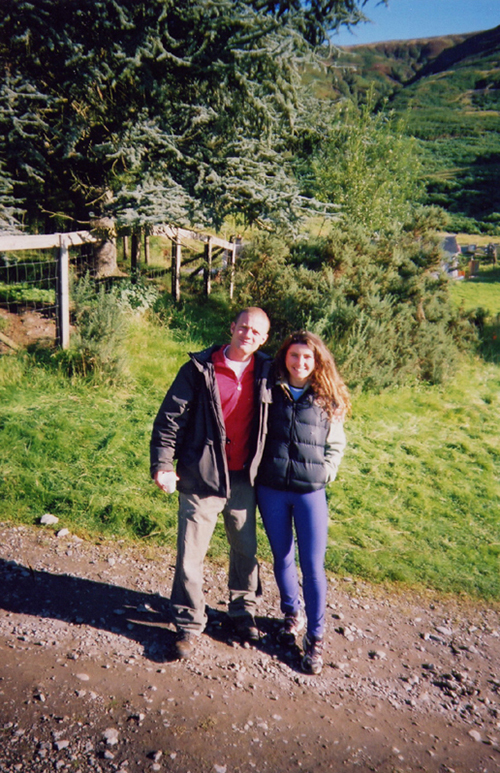
In my heart of hearts, I was proud of all she had achieved. I knew she remembered what I had always advised her, that for the two of us the only failure would be not to have tried. I found myself saying: "All my dreams have now been realised. Anna has proved herself in the toughest of situations."
In the silence of the night, however, I lay awake, recalling the interrogation scene, and I shuddered. I heard afresh the clank of the huge metal bar being dropped close to her feet. I saw again her involuntary jump in fright, and I remembered how any sudden loud noise terrified her when she was little. I wondered if this really was what I wanted for my daughter.
There she stood, stripped almost naked, experiencing torture in a cold, dark barn. I recalled how scared of the dark she used to be. I wondered what it was like for her being hooded and not knowing what was going to happen next or who was being so nasty to her. This was no play-acting scene.
I winced, as I saw again her masked captor jerking her injured arm back into its stressful position against the wall. She had let it slide, in an effort to gain relief from pain. I reminded myself that she could have quit at any time, but Anna is not a quitter.
I then thought of all the injuries sustained by her over the years, the damaged Achilles tendon and restructured knee, the broken bones and early signs of arthritis. I remembered the tragic deaths and paralysing injuries among her friends and, most terrifying of all, Anna's own frequent close encounters with Death.
Filled with horror and uncertainty, I asked myself what many an adventurer's family must have asked: "Is this the price one pays for fame? Why does she put herself through such suffering and danger?"
The answer soon presented itself. "Anna is not in the least interested in fame. What she does is her personal challenge."
The self-doubts persisted. I wondered if I am responsible for how Anna has turned out. She once asked me: "What is wrong with just wanting to sit at a supermarket till, earning enough money to live on?"
I knew that would never have been an option for her, but she may have been telling me something. Perhaps I was putting too much pressure on her, pressure to achieve. Was I trying to fulfil my own frustrated ambitions through her?
All I know is that I am mighty proud of her. I am proud of her kindness and generosity, proud of the way she has overcome the terrible handicap of asthma. I am proud of her tenacity and her spirit of endurance. Perhaps, after all, the way I brought her up was all right.
Episode 1, part 1:Start of what is commonly the 3 week 'endurance' section of the normal SAS selection. This includes endurance, fitness and navigation, or 'the hills' stage and tests both physical fitness and mental stamina. To pass this phase, a high level of determination and self-reliance is vital. This stage normally takes place in the Brecon Beacons and Black Hills of South Wales but, because of foot and mouth at the time of filming, the long drag was actually far tougher for the BBC candidates as they climbed back and forth across the mountains above.
Episode 1, part 2:
Episode 1, part 3:
The culmination of the endurance phase of selection...'the long drag' is a 40 mile trek carrying a 55lb bergen, that must be completed in under 24 hours. Candidates have to carry an ever-increasingly-heavy bergen over a series of long timed hikes, navigating between checkpoints. No encouragement or criticism is provided by the supervising staff at the checkpoints. SAS Directing Staff (DS) are fully-badged members of the regiment and leave each candidate to their own devices. This can be a marked contrast from the selectee's experience in their parent units. They would be used to their instructors shouting constant instructions at them, along with encouragement and abuse. The demands of life in a special forces unit require each member to be self-motivated.
Episode 1, part 4: Escape & Evasion (Stage 3 of normal selection)
The small number of candidates who have made it through endurance and jungle training now enter the final phase of selection. The likelihood of a special operation going wrong behind enemy lines is quite high, given the risks involved. The SAS want soldiers who have the wherewithal and spirit required to escape and evade capture and resist interrogation.
Episode 1, part 5: Capture.
Episode 1, part 6:
Episode 1, part 7:
Episode 1, part 8:Interogation
For the escape and evasion (E&E) portion of the course, the candidates are given brief instructions on appropriate techniques. This may include talks from former POWs or special forces soldiers who have been in E&E situations in the real world.
Next, the candidates are let loose in the countryside, wearing World War 2 vintage coats with instructions to make their way to a series of waypoints without being captured by the hunter force of other soldiers. This portion lasts for 3 days after which, captured or not, all candidates report for TQ.
Episode 1, part 9: Tactical Questioning (TQ)
Tactical Questioning (TQ) tests the prospective SAS men's ability to resist interrogation. They are treated roughly by their interrogators, often made to stand in 'stress positions' for hours at a time, while disorientating white noise is blasted at them. When their turn for questioning comes, they must only answer with the so-called 'big 4' (name, rank, serial number and date of birth). All other questions must be answered with 'I'm sorry but I cannot answer that question.' Failure to do so results in failing the course. The questioners will use all sorts of tricks to try and get a reaction from the candidates. They may act friendly and try to get their subjects chatting; or they stand inches away from their subjects and scream unfavourable remarks about the sexual habits of their mothers. Female interrogators may laugh at the size of their subject's manhood. Of course, a real interrogation would be a lot more harsh and the subject would not know that they get to leave alive when it's all over. That said, days of interrogations and enduring the stress positions and white noise break down a man's sense of time and reality. The SAS are looking for men who can withstand such treatment long enough so that the effects of revealing any operational information they might have can be lessoned by HQ.
Episode 1, part 10 Reduced youtube version
Episode 1, part 11 Reduced youtube version
After all that...
Mike saw what Anna and Louise Rickard had achieved, particularly in the hitherto-presumed impossile long march, and recommended a policy change on women in the special forces.