The Highs and Lows of Life
Were a fairy godmother to appear and offer me the opportunity to relive one day of my life, I would, without hesitation, choose March 4, 1971, the day my husband and I drove to Manchester to collect our daughter from an adoption society.
As I was approaching my 43rd birthday, it was a miracle for us to have been accepted and approved as adoptive parents. We had been contacted by telephone the previous day to tell us our baby girl was waiting for us and we were to arrive around lunchtime.
It was a beautiful sunny day, with a clear blue sky, which seemed in harmony with the brightness in our hearts.
On arriving at the society, we had an interview at which all the relevant documents were discussed and background information passed on. We were told we could choose our own names for our baby. She had already been christened Denise.
Only once before had I been given the privilege of naming a baby. In 1938 when I was 10, my parents' last baby was born. At that time the Princesses Elizabeth and Margaret were in the news so I thought Margaret Rose would be a lovely name for my baby sister.
My parents, however, decided that the two names would be too obvious and too pretentious so they suggested Margaret Ann and I was happy enough with that.
Could I later choose anything less than a Princess's name for my own precious baby? The Royal most in the news in 1971 was Queen Anne Marie of Greece, so I chose the names Anne Marie Catherine.
Later she would be called Annie and later still, Anna, but Anne Marie Catherine are her official names. Once she had these names she seemed to me to be a new person. Baby Denise was another woman's daughter. Baby Anne was mine.
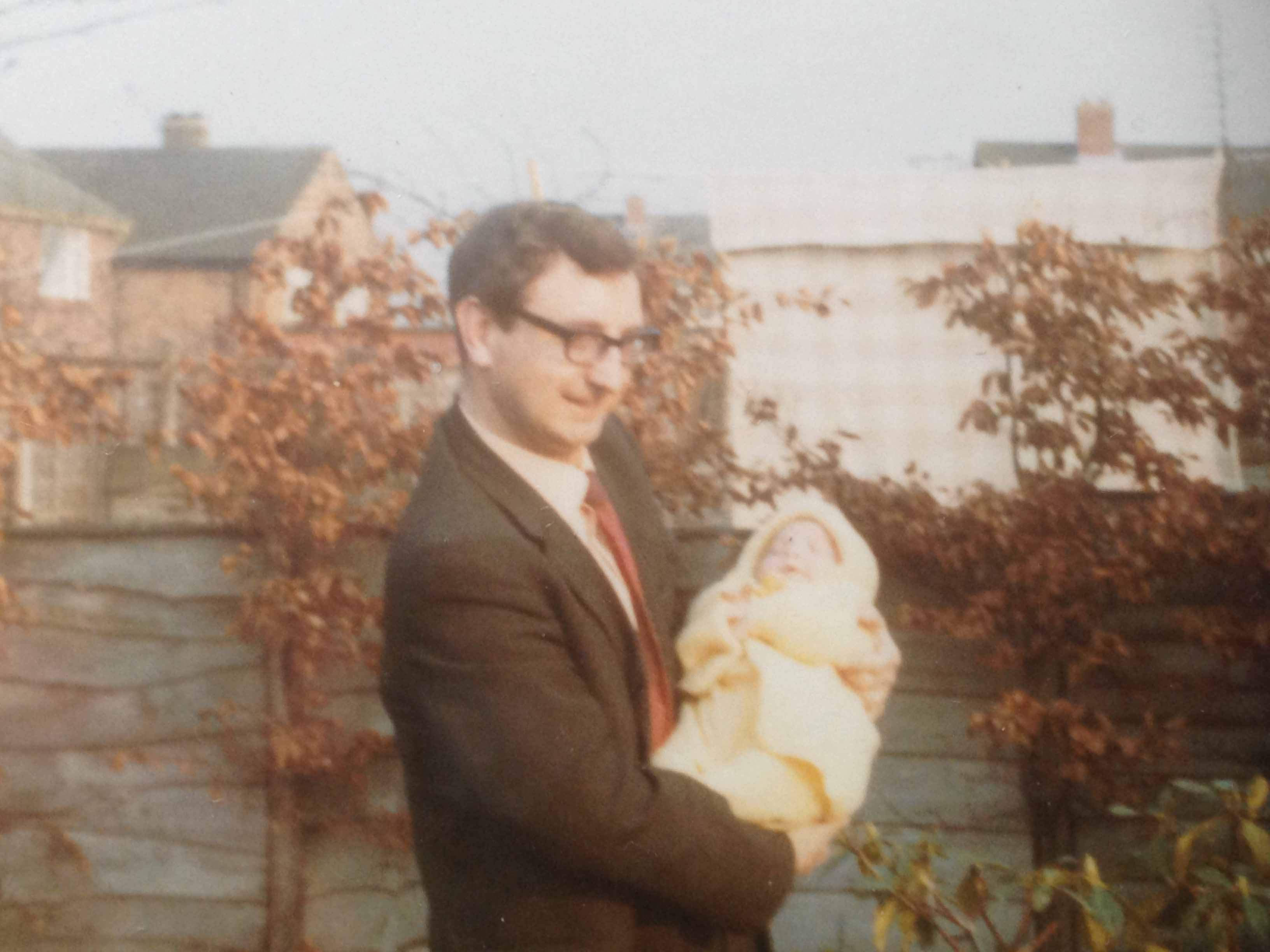
When the business side was over, the moment I had been waiting for arrived. A little mite, dressed in a flannelette baby-gown, was brought in and placed in my lap. I looked down at her blotchy, tear-stained face and I was filled with wonder and felt an instant love for this tiny baby.
She stopped crying and seemed at ease with me as I spoke reassuringly and comfortingly to her. A prayer instinctively formed on my lips: "Dear God, please give me a sign that this tiny baby wants me as her mother as much as I want her as my daughter." Suddenly, the tiny face seemed to break into a smile and I called out: "She's smiled. She's going to be happy with me."
I was on a high, floating on clouds. Everything around seemed dreamlike, unreal, otherworldly. I could say, like the disciples on the Mount of Transfiguration, "It's good to be here", and want to stay like that forever.
I was vaguely aware of the nun's words: "That wasn't a smile. A baby that young can't smile. It will have been a symptom of wind."
Her words made no impression on me. They just didn't register. All I cared was that I had received my sign from above. Anne Marie and I were henceforth bound by an unbreakable bond. From then on she would forever be part of my life. I could never forget her or turn my back on her. She would be my very reason for living.
Those early days were euphoric. It was to be the opening of a whole new life for me. Each day brought new joys. Looking back, later, however, I could detect certain shadows in the wings. There was the morning in the garden when Anne Marie began to cry and I sat there on a rock cradling her in my arms. I could discover no reason for the crying, yet on and on it continued, rhythmic and non-stop.
Then there were the rashes, which would cover her whole body if she ate egg or touched grass, and the occasional wheezing and sudden onset of limpness when the light went from her eyes. Each time I would take her to the doctor till finally he told me I was a fussy mother, wasting his time unnecessarily.
I might have known that those who reach the dizzy heights can also descend to the depths. There came the day when Anne Marie was two and three-quarters years old that I wish never happened - a day that changed our lives so dramatically that we could never again be the same people.
She had a bit of a cold and I noticed a slight wheeze. My husband took her in her pushchair to the doctor's. I had noticed, too, her listlessness and the change in her eyes. When they arrived home she was asleep. The doctor had said she merely had a slight cold.
I put her to bed but by 6pm the familiar rhythmic crying had started. I called the doctor and he refused to come, saying, rather sharply, that he had seen her earlier and had already told us that there was nothing serious wrong with her.
Over and over again I curse myself that I didn't take her to the nearest hospital at that point. I sat up all night with her and towards morning I suddenly knew beyond all doubt that she was seriously ill so I rang the doctor, screaming at him to come at once because my child was dying. I remember his saying: "Let me get out of my pyjamas. Then I'll come."
When he arrived, one look at her was enough. He rang Copthorne Hospital in Shrewsbury and asked them to be ready to receive her. He told us to stay calm and to drive her at once to the hospital.
He said: "How was I to know? She was all right when I examined her."
The day that followed was the darkest day of my life. The doctor had told me it was an asthma attack. I knew next to nothing about asthma at that point. Fortunately, the hospital had acquired the latest oxymist tank, which saved my daughter's life.
She was stripped and placed in an oxygen tent with icy-cold mist spraying on her. We, who had been inseparable, were now separated by a plastic tent. Then the paediatrician asked us to leave the ward for an hour and to this day I can't forgive myself for leaving my child alone for that hour.
Did I have a choice? Weren't consultants in those days on a par with God? When we arrived back on the ward, the whole place was hushed and silent and Anne Marie was lying alone in her plastic tent, highly distressed, in a state of shock and worn out from crying.
One of the visiting mothers told me about the trauma the child had gone through and how she had been screaming for her mother. It was a knife through my heart. Anne Marie then showed me her little leg punctured with needle marks, and she begged me to take her in my arms and carry her away from there, away home.
I tried to explain that the injections and medicine were to make her better. I promised her I wouldn't leave her alone again. I insisted on staying there until she could leave with me.
By now my world was once again unreal, but this time it was a nightmare world of torture, fear, anxiety and heartbreak, a depressing depth from which I longed to escape but couldn't.
My powerlessness hit me hard. A young house-doctor told me that Anne Marie had only a 50 per cent chance of surviving. The paediatrician was angry that the doctors hadn't diagnosed the condition at the very first symptom.
He assured me that there was nothing I could have done to prevent it happening. It was probably hereditary but, as she was adopted, we couldn't be sure. That day left its mark on us. Anne Marie recovered but she has been hospitalised many times since and has been fighting again for her life.
Rarely has she complained but one day after she had been in hospital, we were sitting on the stairs together when she laid her head on my shoulder and told she didn't want to die in an asthma attack. She wanted to die in a fall on a mountain she was climbing. This was a chilling revelation.
I longed to take her asthma away. I wish I could kiss it away as I used to kiss away her cuts and bruises when she was little. Rarely has she let it get the better of her. She has lived her life to the full, swimming, dancing, playing musical instruments, climbing, cycling and skiing.
As she once said to me, she might never have done any of those challenging things had she not had asthma. Ultimately, she hopes to climb Mount Everest in her second attempt and, perhaps, as she recently consoled me by saying, because she has had to cope with asthma all her life, she may be better able to deal with high-altitude. I know that I have reached my own heights but I have also fallen to the depths.