Margaret
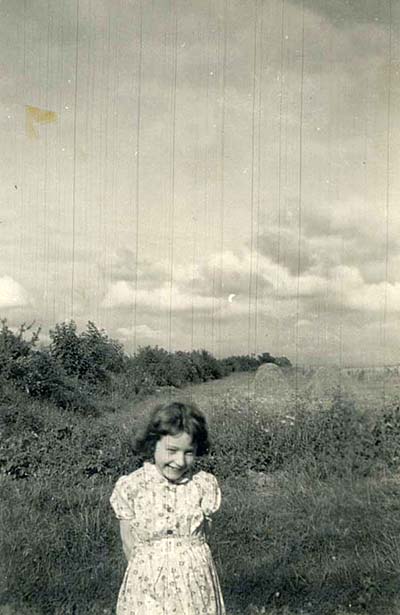
Margaret Ann, my youngest sister, was born in September, 1938 in the little town of Durrow, in the Irish Midlands. We chose the name Margaret because of Princess Margaret, and Ann because it was the name of the youngest daughter of the doctor who attended my mother at the birth. A month later we moved to Abbeyleix to live near my father's old home.
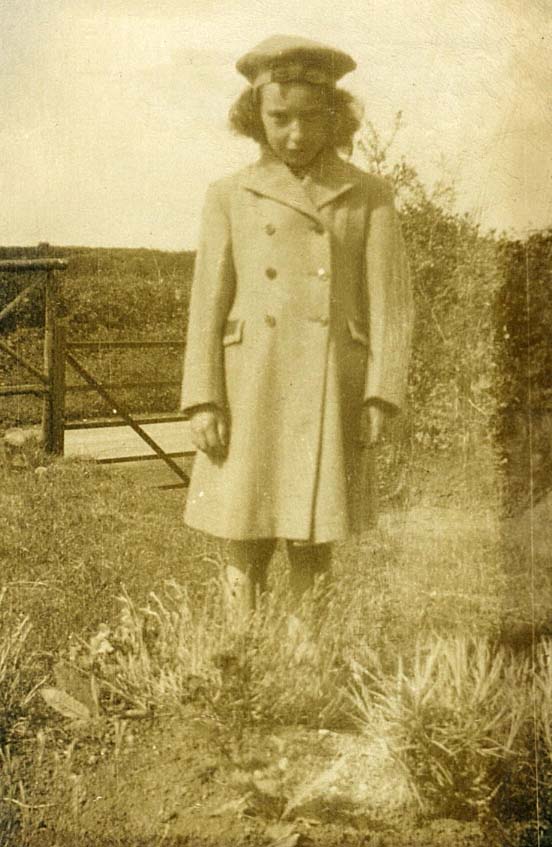
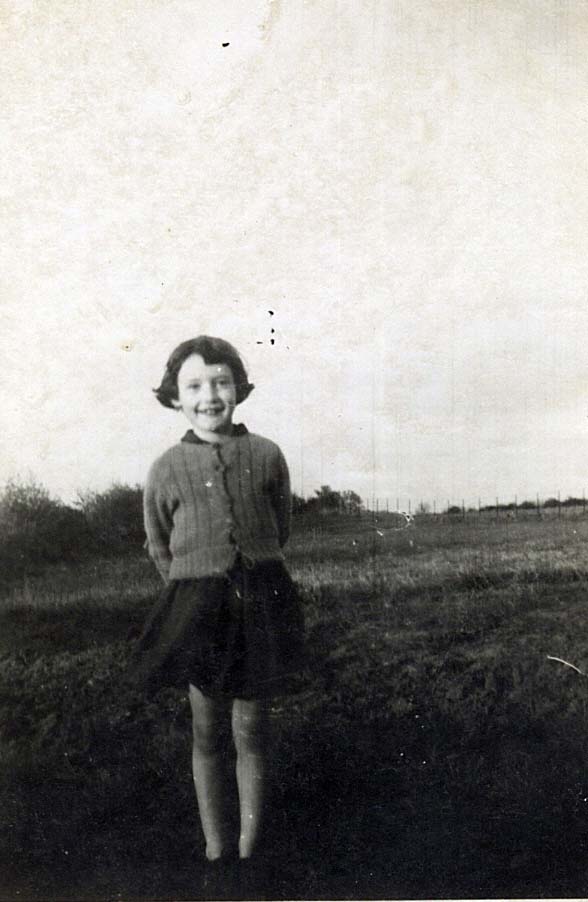
By the time Margaret was one, World War 2 had begun. Times grew ever more difficult for our parents as for so many others. When Margaret was two, I went away to boarding school so from then on we were together only during holidays. She was shy and gentle and everyone loved her. She was in awe of the big sister whom she saw only three times a year at the end of every term. She would hide from me, peeping out whenever she thought she couldn't be seen, but on my last morning before leaving again for school, she would creep into my bed and snuggle up close as if she wanted to keep me there. She adored me and she wrote sweet letters to me.
So the years passed until she was ten. By then our parents had fallen on really hard times. Because our father suffered from an incurable lung disease he worked only spasmodically. There was no such thing as Social Security or sick leave on pay in those days in Ireland; if you didn't work, you had no income. To see a doctor, you had to have money to pay him. Margaret was showing signs of severe tiredness and listlessness. Every day she had to walk over a mile to and from school and on the way home she would lie down at the side of the road, exhausted. She appeared bow-legged as if she suffered from rickets, a common disease in those days, due to mal-nourishment, yet none of these symptoms appeared alarming enough to investigate.
Christmas 1948 approached and she was looking forward to Santa but our parents warned her there would be no Santa as times were really hard. On Christmas morning she woke up, still hoping he would have come but he hadn't. If only we could put the clock back, we'd beg, borrow or steal to make her last Christmas the best ever.
By February, she was complaining of a pain and swelling in her knee so our mother took her to the doctor, a man who had a major drink problem, but who had been allowed to continue in practice. He examined her knee and told our mother she had probably fallen. She insisted the child hadn't fallen but he would have none of it. He rubbed the knee to disperse the gathered fluid.
Margaret grew worse and was confined to bed. I still have a letter she wrote to me 'c/o The Bed'. Her sense of humour, intelligence and wisdom beyond her years shine forth from the yellowing pages. She was thanking me for a cardigan I had sent her and asking me if I could send her some matching wool so that she could mend it when it got torn in the future. That poignant request still brings tears to my eyes.
On St Patrick's Day, 1949, my brother, then 13 years old, met me off the bus. As we walked home, he suddenly blurted out in a broken voice, 'Margaret is dying. She's in the Fever Hospital.'
'Don't say such things', I screamed at him. 'That is not a fit subject to joke about.'
'I'm not joking', he answered.
It was only too true. Margaret's original illness was secondary tuberculosis (TB) of the knee and the doctor had dispersed the fluid to her brain. She was lying in an isolation ward in the local hospital, heavily dosed with morphine to deaden the indescribable pain of TB meningitis. She probably had pulmonary TB originally, a scourge in the past.
Standing by her bed later that day was so traumatic for me. She was hallucinating and asking me to look up at the beautiful visions she was seeing and she'd feebly stretch out her little hand to me and then pull me close and whisper secrets that she didn't want our parents to know, and becoming distressed if she couldn't make me understand what she was saying. I had taken her some oranges and she asked me to peel one for her. The smell is as vivid today as it was 61 years ago when she sucked the juice from the proffered fruit in an effort to allay her fever. I stood there, feeling so helpless and praying that God would let me take her place and set her free from pain and imminent death. I would gladly have sacrificed my own life to save hers.
One of the nursing sisters was waiting for me on my way out of the ward. She begged me not to pray for Margaret's recovery because she would be severely brain-damaged if she survived. The nurse told me to pray rather that God took my little sister before the morphine began to lose its effect as that would be unbearable to watch.
The doctor from the next town, the one who had brought her into the world, took over her care till she left the world. At 6 pm on the 21st March, 1949, as the Angelus bell rang out from the Catholic church, Margaret took her last breath and left two distraught parents who never recovered from the trauma, and three sisters and two brothers who grieved and shed so many tears that they felt they would never cry again.
Five years earlier, our rector s son, Sandy, had also died from meningitis in his final year at University. One of the things Margaret had whispered was that the Archdeacon had visited her bedside and recited 'The Lord is My Shepherd' as he held her hand. That must have brought such sad memories back to him, but it seemed to have given her tremendous comfort. He told us afterwards that he had indeed sat with her and that she had asked him to recite the psalm.
Trying to imagine my little sister as a 72-year-old woman, and Sandy as an 87-year-old man only brings to mind the famous words of Remembrance Day, 'They shall grow not old as we who are left grow old: Age shall not weary them, nor the years condemn.'
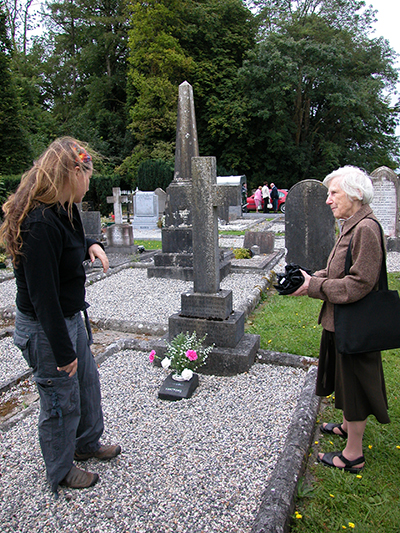
In September 2007 I revisited Margaret's grave in Abbeyleix and as I laid flowers in remembrance, the pungent smell of oranges mingled with the sound of her gentle voice and the cosy feel of her frail body as she tried to cling to me. Her pretty face smiled shyly at me, and once again I shed many tears. I will never forget her.