Memories of my Sister, Helen
Ted, Helen, Muriel, Henry and I were born in the hunting-lodge of Lord Bessborough's Irish home - Bessborough House, Piltown, Co Kilkenny.

I have but few memories of Helen from those years, between 1930, when she was born, and 1935, when we left there and went to Durrow, Co Leix.
One day we were out playing in front of the big house, picking horse chestnuts. We used to play conkers with them, poking a hole through a chestnut with a steel knitting needle and threading a length of string through and tying a knot at the end. Then we took it in turns to hit one another's conker. I just remember playing with Ted who always won! Anyway, as we picked the chestnuts, some local kids began to shout: 'What are ya pickin', Helen?' We ignored them so more loudly and threatening, they shouted: 'I'm tellin' ya, if I go up to ya, ya'll tell me what ya're pickin'.' At that our mother called to us to come in. Making daisy chains from the daisies that grew so prolifically there was another favourite occupation.
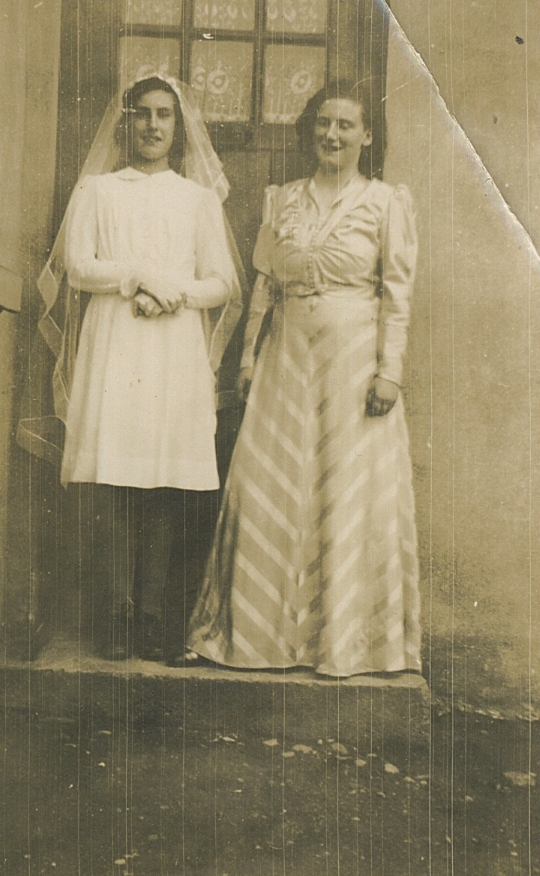
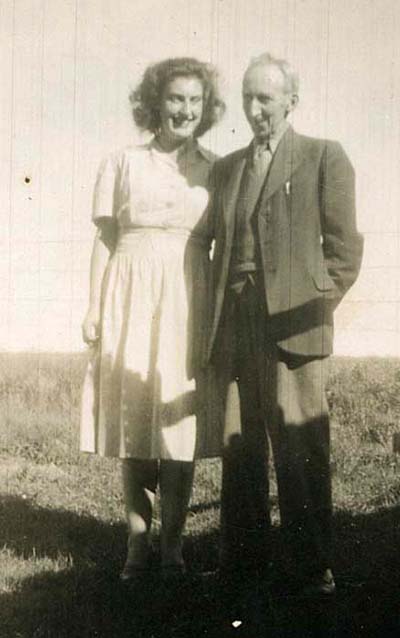
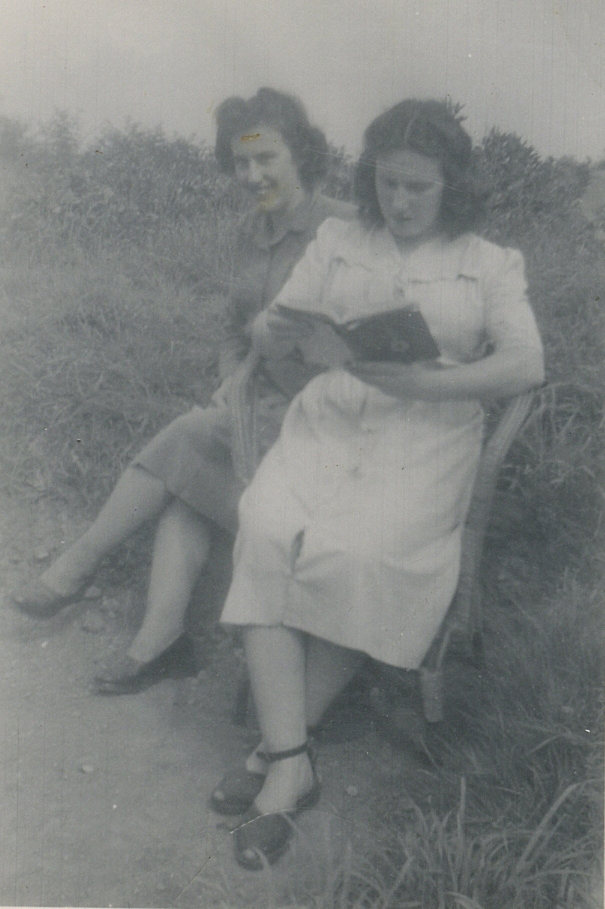
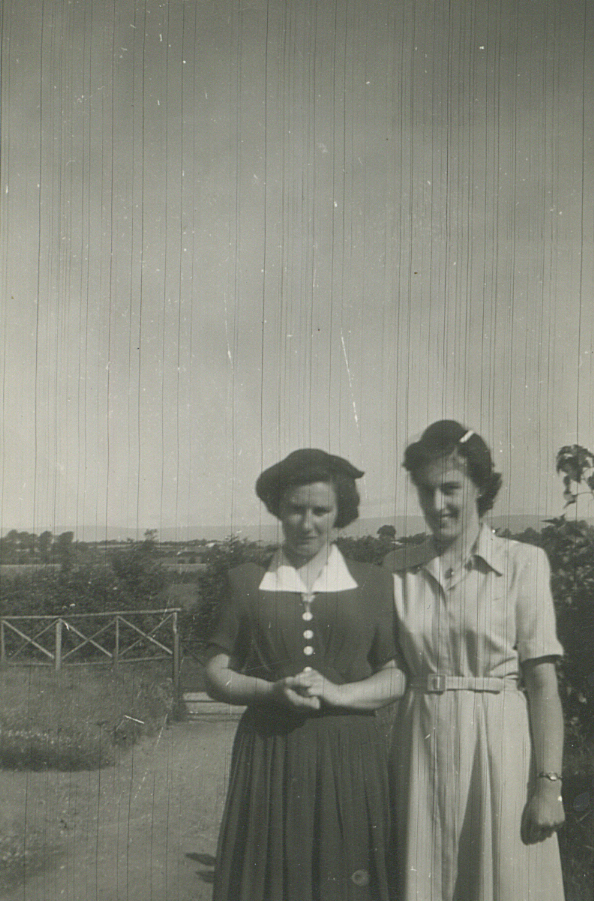
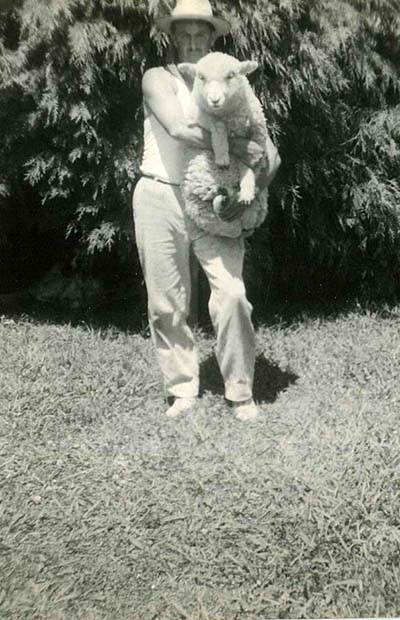
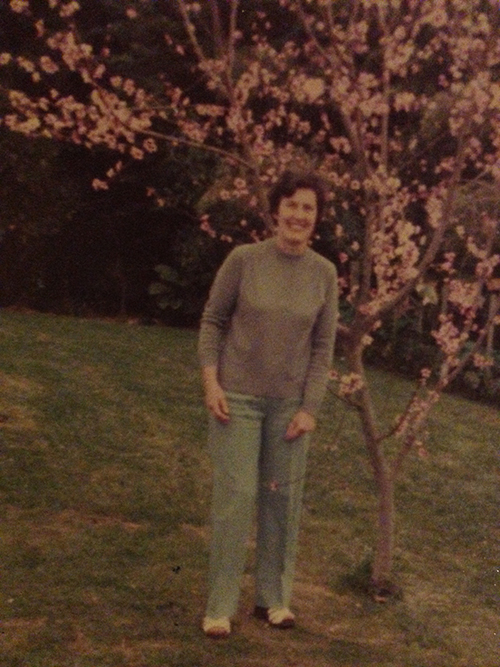
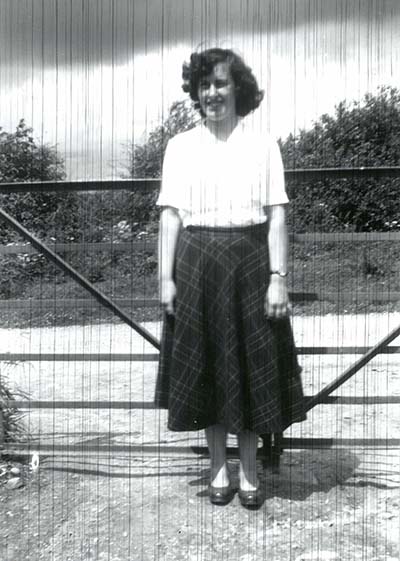
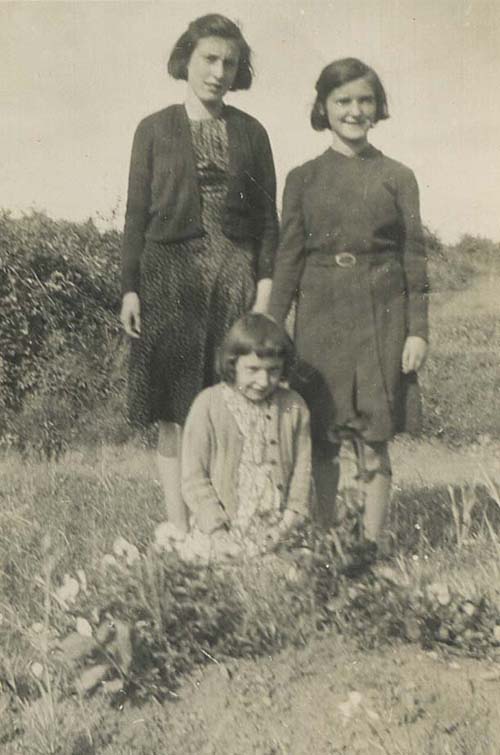
Childhood Photos


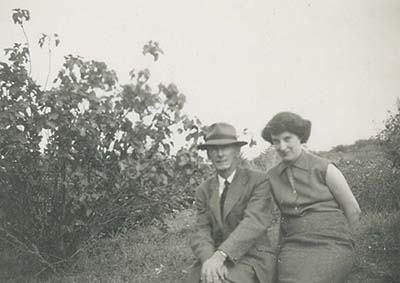
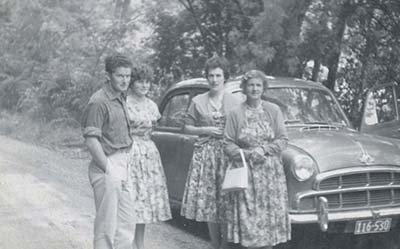
Early Adulthood in London
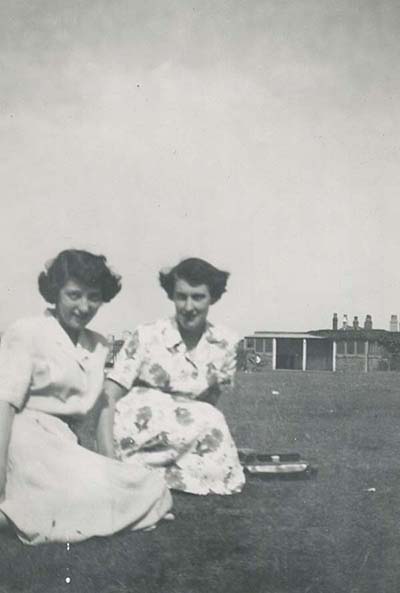
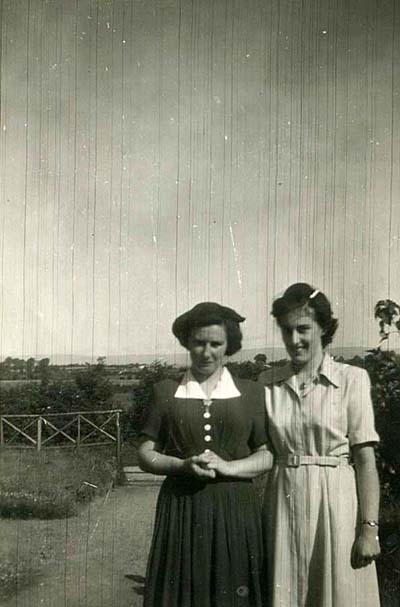
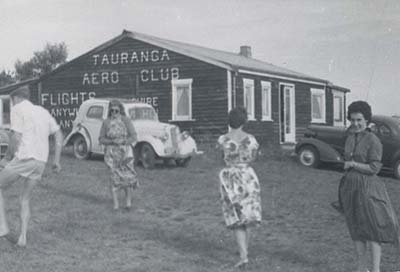
Helen and friend, Doris Groves, in Margate visiting Muriel when sick
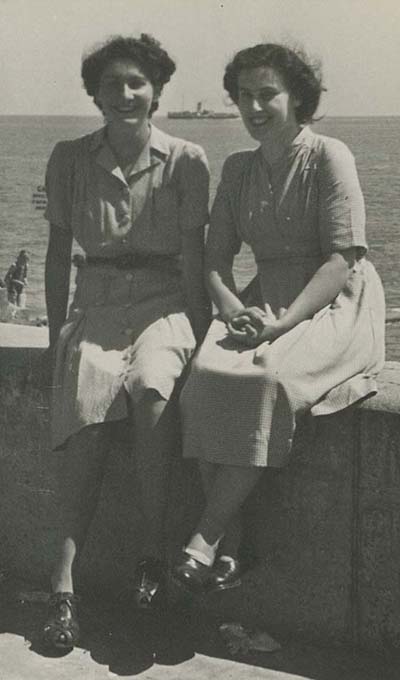
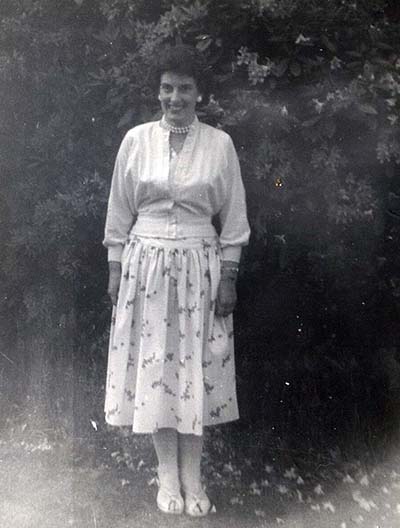
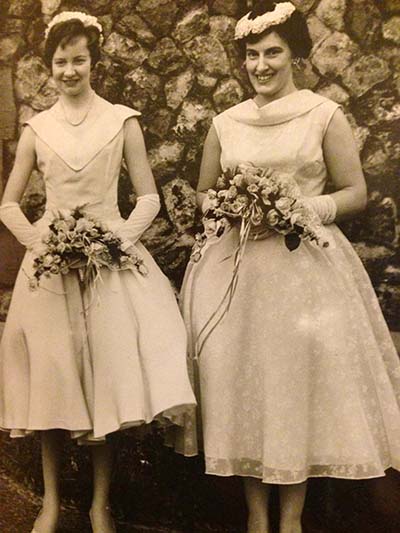
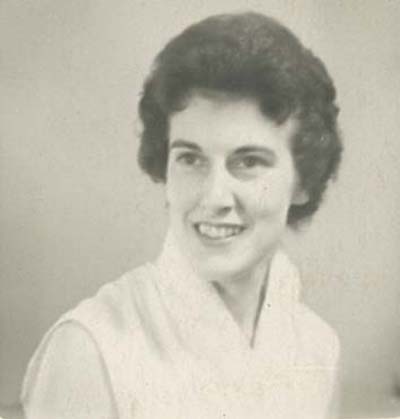
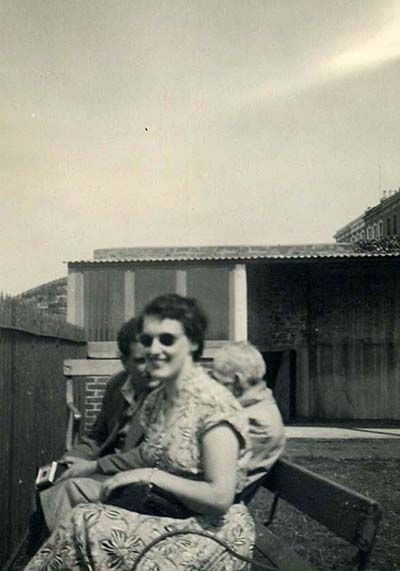
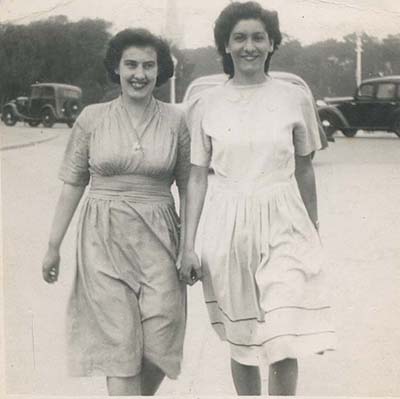
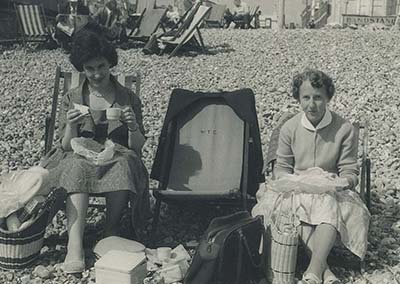

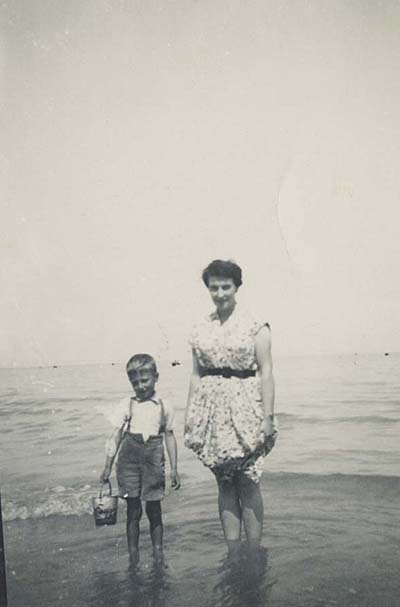
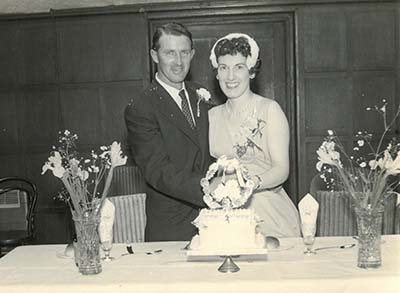
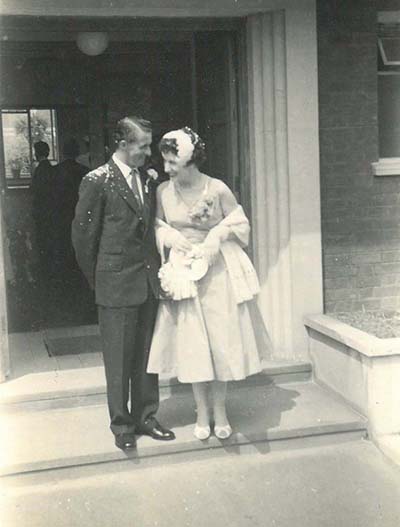
JJ travels the length of the earth to marry her
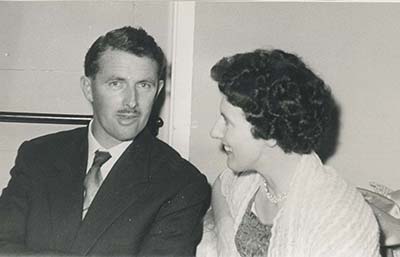
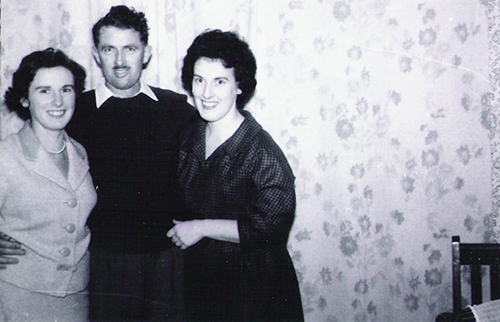
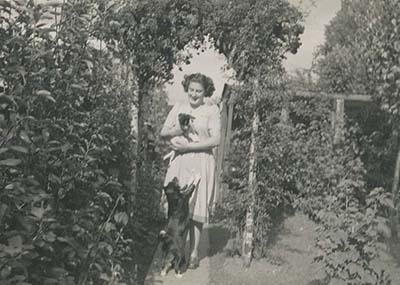
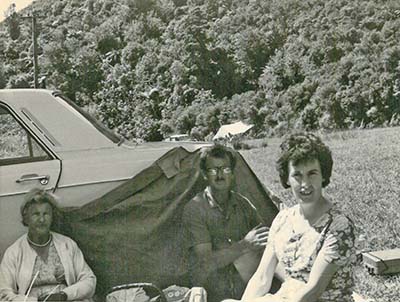

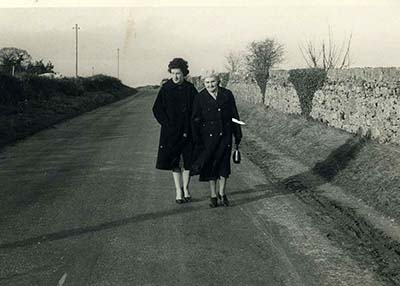
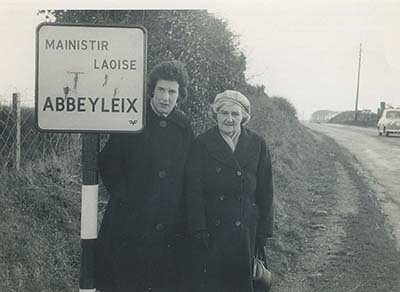
Last visit to Ireland
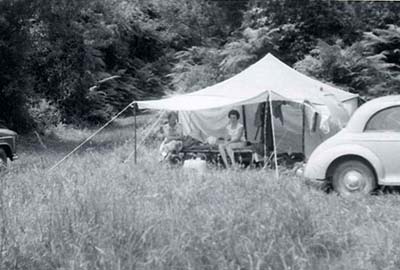
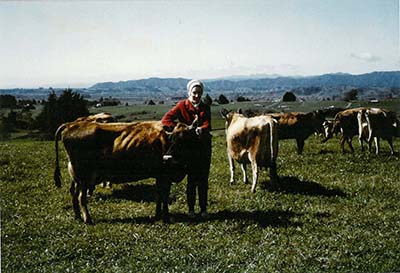
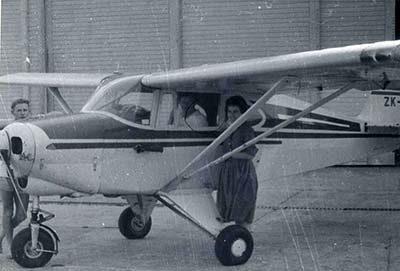
Early Days in New Zealand
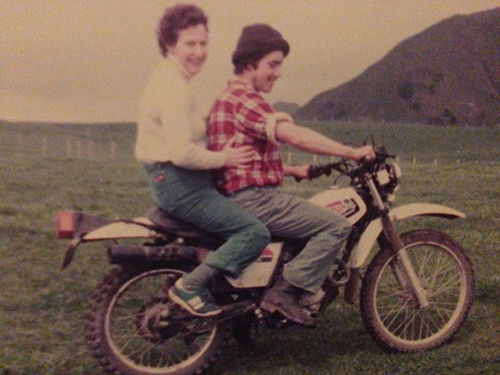
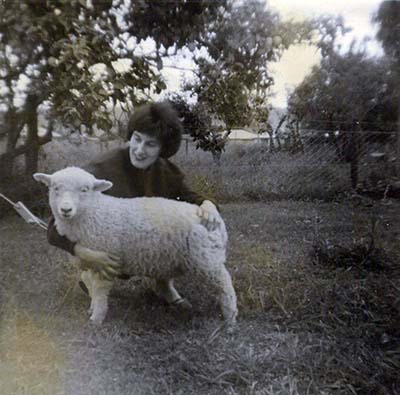

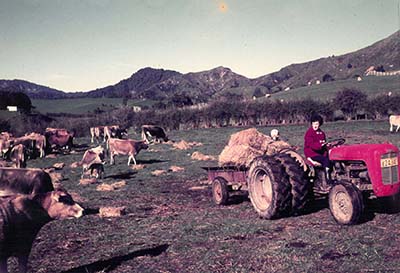
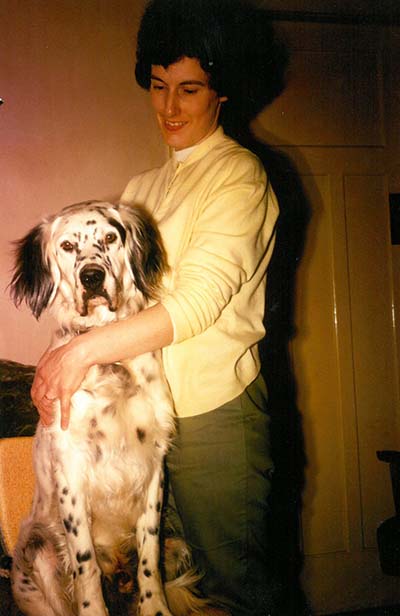
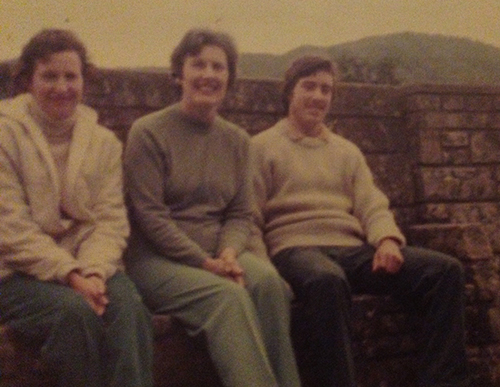
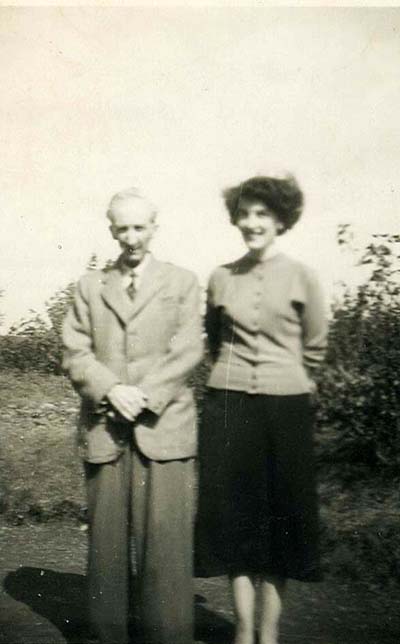
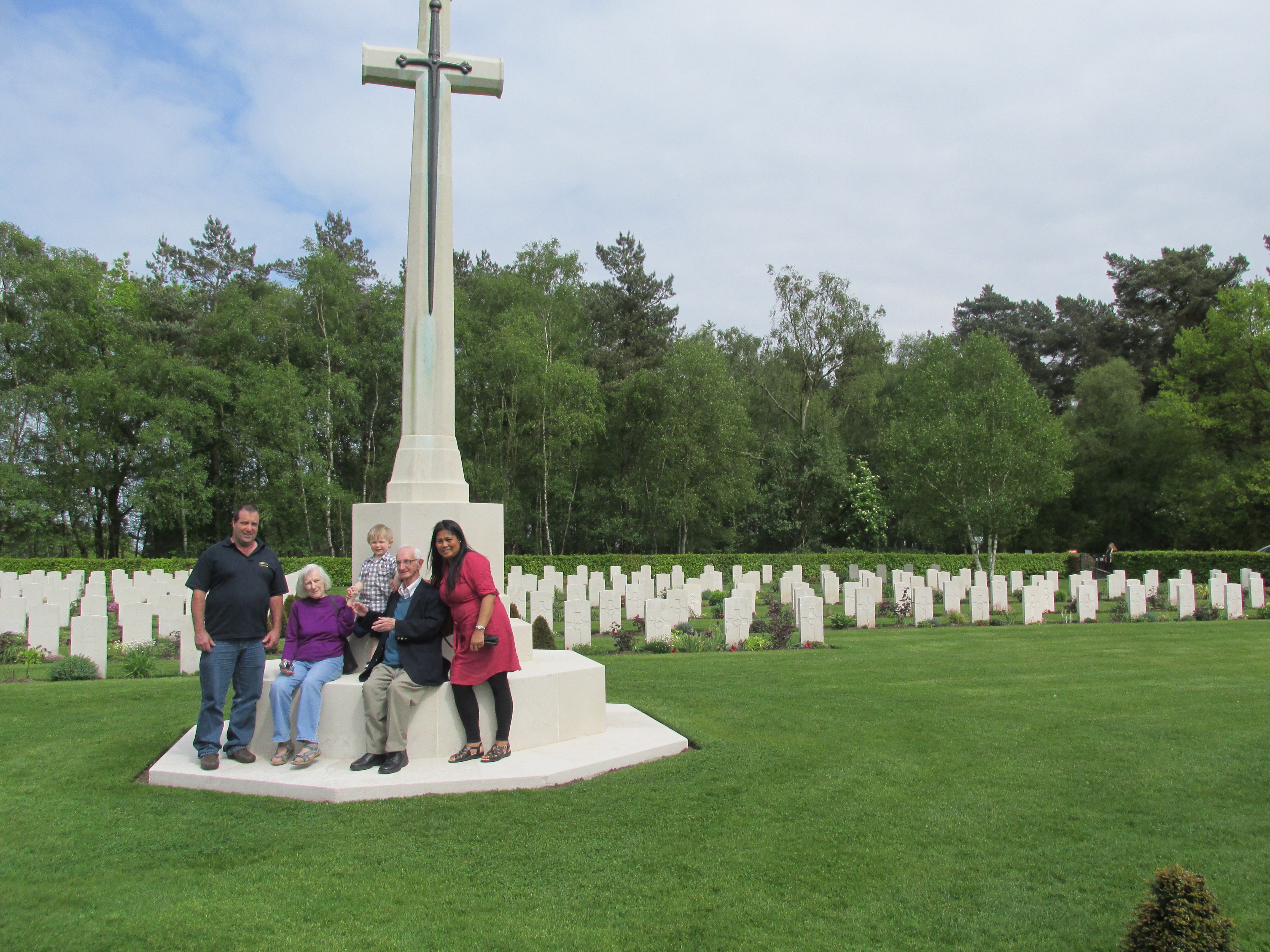
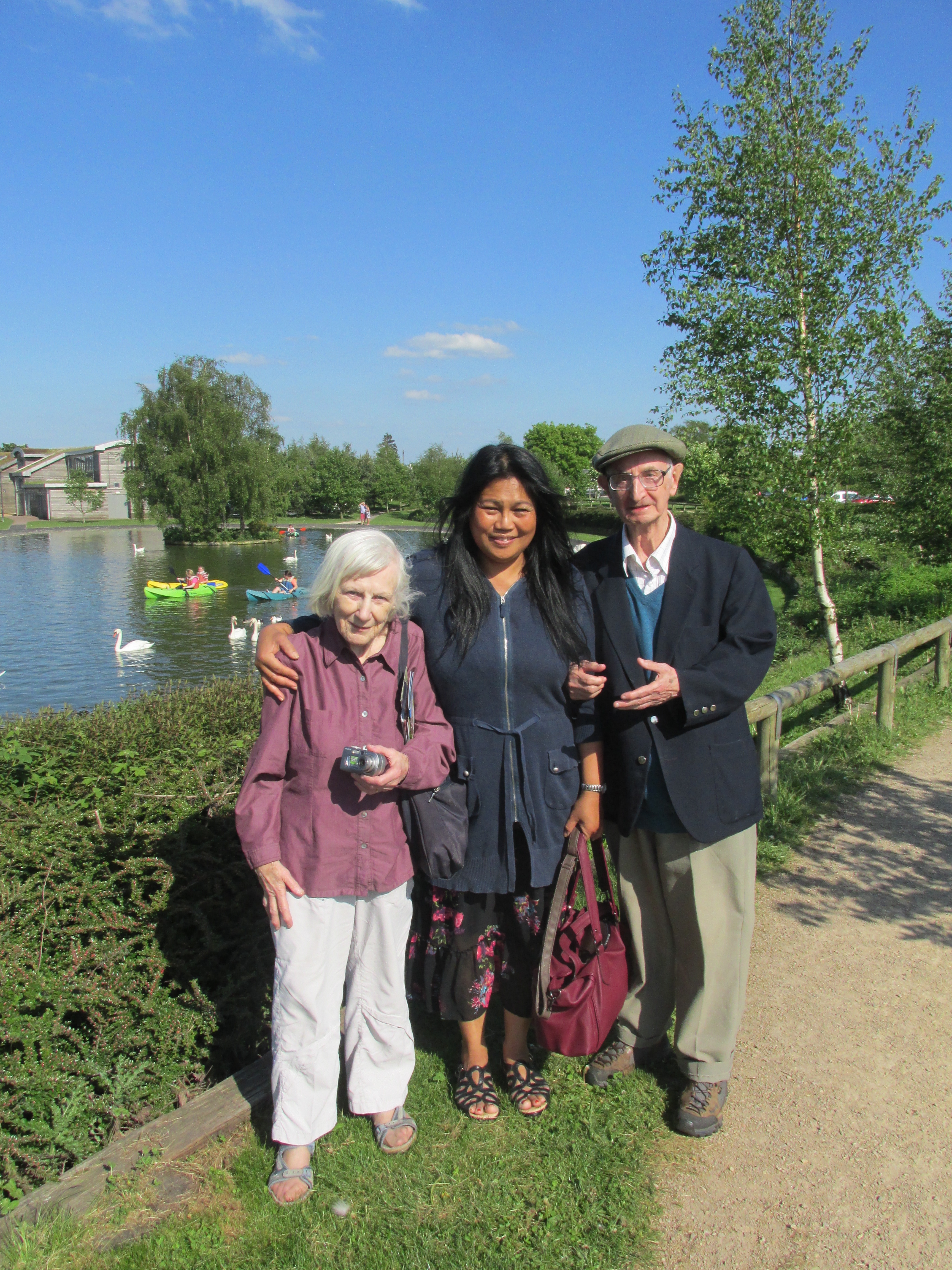
Another day Ted, Helen and I were walking in the woods where a stream flowed through the estate when Helen wanted to go to the loo, so she and I went down the slope to the water's edge while Ted stayed above. Suddenly, Helen slipped and fell in, getting herself soaked. Ted ran down to help get her out of the stream and she was screaming her head off. The gamekeeper passed and walked on and met my father and told him that his son had pushed his sister into the stream. My father came along and although we told him what had happened he hit Ted across the knuckles with a set of keys. Ted was always teasing us and when I was five he nicknamed me 'Owee Cooig'. Owee was the sound of my crying when he teased me and the cooig was Irish for five, my age when I acquired the nickname. He called Helen 'Percy Pelican'. Why, I don't know.
One vivid memory is of the day in 1935 when Helen and I took our paternal grandmother for a walk in the demesne and suddenly she began to run and we thought the wind was blowing her away but she was having a stroke from which she died. It must have been that night our father woke us and took us into the bedroom next to ours to say goodbye to Granny. Helen remembered clearly how we chanted 'Good-bye, Granny'. I just recall her lying on the bed as if peacefully sleeping while my father knelt by the bed with one hand outstretched towards his mother while he sobbed away. The sight of my father crying upset me. I don't recall any more of what followed but I remember being in the dining-room in Fordville, Abbeyleix, and Uncle Henry was taking a packet of cocoa out of the wall cupboard; he asked Helen and me if we'd like some and I said 'No, thanks, Uncle'. He then said he knew our parents had told us not to take anything from him and, indeed, they had, for, as we later learned, he was dying of TB. Helen remembered his saying, 'No force, black pig'. In the kitchen an old His Master's Voice gramophone was on the table and Uncle Henry played a record for us of the hymns:
will the angels play up yonder?
Will the angels play their harps for me?
and
Shall we gather at the river
where bright angel feet have trod
With its crystal tide forever
Flowing by the throne of God?
Yes, we'll gather at the river.
Every now and then the sound would slow down till Uncle Henry rewound the gramophone. I have sometimes wondered if he was thinking of his own imminent death or if he was sad that his mother had died, when he was playing these hymns. I imagine he was looking after us children while our parents were at the funeral of our grandmother.
The two London families arrived and stayed on for a holiday. Aunt Fanny and Robin and my mother and Helen, Ted, Muriel and baby Henry stayed in a big tent on the hill in Tramore while I stayed with my father at home Monday to Friday and then we joined the others. Aunt Mary and Uncle Eddy and Maureen and Elizabeth stayed in the Atlantic Hotel, overlooking the sea.
One autumn I remember playing with some other kids and we took Helen's knitted cap off her head, filled it with leaves and put it back on her head. I don't think she saw it as fun. We were out in front of the big house where the little pantry window of the lodge overlooked it. Our mother opened the window and shouted at us to empty the leaves out of Helen's cap at once and I remember feeling ashamed. I think she was usually left out of our fun because she was that bit younger like the day our father and Ted and I were having a game of cricket. Our father was bowler, Ted batsman and I fielder. Helen resented not being allowed to take part so she ran and caught the ball and threw it into the bushes. Our father ordered her to fetch the ball back but she stubbornly refused and he went to cut a switch from a tree to give her a hiding but my mother heard her screams and ran from the house with a baby (Muriel, probably) in her arms and rescued Helen. It isn't that long ago that Helen told me her side to this story and I realised then that she was at that time left out of all that was going on. Ted dragged me into whatever mischief he was into but Helen was that much younger.
I think it was about when I was seven that Aunt May Shekleton gave me a new coat, a dark-green, but I already had a decent coat whereas Helen needed one. My father took the new coat and sat me down and quoted from the Bible 'He that hath two coats let him give to him who hath none'. He then said he was giving my new coat to Helen. I remember feeling so resentful because it was done without my having any say in the decision and thinking if I were allowed to choose what to do I'd willingly give Helen my second coat. I didn't blame Helen but I felt angry with my father for the way he did it.
In September 1935 we packed up and set off by hired car for Durrow, Co Leix, then called Queen's County. What Helen afterwards spoke about was our leaving Scoot, the Border collie, behind. Afterwards we heard that he had been shot because he couldn't stop grieving for us. It was Helen who remembered his name. What I recall is looking back and grieving for all the familiar places we were leaving. I hated Durrow, living in a town house next door to a pub and with only a back yard, after the beautiful Bessborough demesne which had been our playground. I remember our mother had some hens, a cockerel and some ducks and we liked to collect the few eggs that the hens laid. Generally, we bought a dozen eggs at a time from people called Dobson who lived in a cottage on the other side of the big house, near where our father had his workshop. Mrs Dobson would give an extra egg to whichever one of us went to collect them. On one occasion the cockerel attacked the baby in the pram (Muriel, I guess), and we were screaming in fright till our mother came running with a broom to chase the cockerel away.
In Durrow, the shop where we did most of our shopping was Finnemores. By this time my father had set up in business as an ecclesiastical woodworker and he hired Finnemores' garage as his workshop. At Christmas they gave my mother a Christmas stocking for each of us children as well as a box of crackers and other goodies. We kept the wrappings and the paper hats and little toys from the crackers and made a display in the window looking out on the street. Some local kids passed, calling out: 'You thought we thought it was a shop'. Our mother ordered us away from the window. We used to watch out for the Dublin Cork bus every day and as it passed on its way south we'd shout out 'Push' and on its way north 'Pull'. Push, Pull was some cartoon in the Irish Independent! Our amusement was simple. I shall never forget the Friday we heard a young man had been murdered at the Swan. He was a commercial traveller for a creamery and he had been in Durrow collecting money for orders and on his way home a man known to him, a father of young children, had battered him to death and stolen the money. Until the murderer was arrested we had to stay in our mother's sight. He was hanged quite promptly.
Helen was unhappy at school because she was left-handed and the teacher tried to make her write with her right hand; she developed a stooped back and a stammer so our mother took her to the doctor and he ordered that she have a break from school. I thought it was for a year but Helen said it was for three months and the doctor told the teacher the child was not to be forced to write with her right hand. Ted, too, was left-handed but he was sent by bicycle the five and a half miles to Abbeyleix. The school in Durrow was horrible. This episode put Helen off school for life.
We used to play with Maureen Cashin from the pub next door. We'd play hopscotch on the pavement outside the house. We'd draw a large rectangle in chalk and divide it into 9 sections and take it in turn to hop from section 1 to section 9 on one foot while toeing an empty boot polish tin along from section to section. Once you dropped your second foot you were out! We also played with a skipping rope. We liked to go together for walks along the Killermogh Road out of town, sometimes playing in the fields or walking down by the river. In the evenings our parents would take us all on a walk along the Abbeyleix road. Life's pleasures were simple in those far-off days. My main friend was Janet Hovenden while Helen's was Janet's sister, Edie who died when a car hit her as she cycled at the age of 29. Janet married a vet in the North of Ireland while Edie was married locally. Florence Pearson, whose mother had a newsagent's shop, was Janet's and my age. The Pearsons were what we called Dippers and on Sundays they went across to Watergrasshill to their religious service while we attended the Anglican Church. I can't recall Helen ever being in any sense religious. There was a distinct division in those days between the main religions. Generally, we mixed only with those of our own group.
Every Boxing Day groups used to dress up and go round the houses singing and dancing. We used to eagerly await the Abbeyleix group of Wren Boys who came across in a lorry and who really were good entertainers. One version of the song they sang went as follows:
On St Stephen's Day was caught in a furze.
Although he was humble, his family were great
so rise up, me men, and give us a trate
Up with the kettle and down with the pan.
Give us a penny and let us be 'an'.
In autumn 1938, when Margaret was a tiny baby, we moved to Abbeyleix. Uncle Fred drove us children across to our new home in Oldtown, and showed us how to make a fire and we sat round it till our parents arrived long afterwards. We lived at first in a thatched house with a slate roof kitchen added on to the rear. Our father paid Tommy Galbraith who lived in a big house further on, 7/6d a week rent (37.5p in today's money). Mrs Galbraith was the teacher in the National school that we attended, while her husband was a farmer. Every evening just after milking time we would take a gallon can to the farm and pay for two pints of milk but Mrs Galbraith usually filled the can for us. After a period of churning we would go for a can of buttermilk for our mother's homemade soda bread.
We had no running water or electricity so we would take a pail across the road to the tap and fill it with water. We children would make several trips a day. At night our parents lit oil lamps and we'd have candles for lighting our way to bed. The girls' bedroom was the ground floor room to the right and Ted and Henry slept in the room above us. Our parents slept to our left and the drawing room was the other side of the hall and far right was my father's workshop and above it his store room for timber and tools. At night time rats used to emerge from the thatch and run around the rooms. Fleas were another plague. The bedclothes were full of them and we'd waken with flea bite marks all over our bodies. Added to those were the head lice! We knew hardship and poverty, hunger and cold.
Most days at first our father would walk up the road to his old home which then belonged to Uncle Eddy in London who let Uncles Charlie and Fred live on there. Our father used the big barn as his main workshop. In the loft we used to find books that had belonged to our Aunt Gladys who had trained as a teacher but who had died about 1929 before taking up her first teaching post. I remember three of the books that Uncle Charlie let me have a story about How the Robin got His Red Breast, a book about wild flowers with some specimens of flowers dried and displayed underneath tissue paper, and a French book still used in Rochelle when I was there, La Belle Nivernaise. Helen was an avid reader and couldn't get enough books.
Every morning we children would walk the mile to the South School next to the Church of Ireland. It was a much happier school than Durrow. Aunt May, our mother's sister, was a nurse in Kilkenny Mental Hospital and on her days off she would come by train as she had done in Piltown and in Durrow and we'd meet her at the station and walk home through the de Vesci woods with her. She always brought a bag of goodies to us and I remember in 1939 she had three pixie caps, a blue for me, red for Muriel and green for Helen. We were thrilled with our caps and started wearing them at once, even across to the water tap! Aunt May was very good to us and brought us most of the new clothes we had. As I was the eldest, my clothes passed on to Helen. We all ended up with bad feet due to having to wear ill-fitting shoes. I remember feeling sorry for Helen because she once got a pair of hand-me-down boots from Ted. They were ugly and the only footwear she had over a considerable time. She never complained.
The war years were bad. My father had no orders for work coming in. The government gave every family a patch of bog where they could cut their turf. My father bought a little donkey and made a cart with rubber tyres on the wheels and Helen would yoke up the donkey and take the little cart off into the woods to collect firewood. Ted helped our father to cut the turf with a slean and then stack it up and leave it to dry. One day they went across to bring the turf home and found it had all been stolen! Then my father bought three trees and cut them down and chopped them up into logs but the piles of logs suffered the same fate as the turf. I missed a lot of the hardship as I had gone away to boarding-school in Cork. I remember one day when I was home on holidays and my father had done some work for Timahoe church. He took the donkey and cart to Timahoe to bring home the wood left over and his tools. Helen and I went with him. We sat in the cart going but it was late at night when we had to walk home as the cart was piled high with materials. It was a frosty star-studded night and I was tired and cold and thought I'd just collapse if we didn't reach home soon. Helen never uttered a word and just walked bravely along. In 1938 our father had bought an old Morris Cowley car for £10. You had to start it with a handle and that was hard work. Uncle Fred already had one. Anna was about eight when we stopped in Abbeyleix and walked around the grounds of where the Oldtown house was. Sydney Pallin, who lived in what was a general store and post office next to us, had bought the land and kept prize horses there. He came across to see who were on his land and he showed us the remains of the Morris Cowley!
All through my final year at primary school Mrs Galbraith would take me down to her home and give me extra tuition and at Easter 1940 I sat the examination for a place in a boarding school and won a scholarship to Rochelle School in Cork. The boarding fees and uniform still had to be paid but our Uncle Dick agreed to pay the fees and Aunt May said she'd buy my uniform. In September I left home and more or less severed my link then with what was going on. When I arrived back for Christmas, my parents had moved from Oldtown to Ballytarsna, to an ex-serviceman's cottage. I hated it there. Helen never resented my getting away from the misery that was our home in those years. On the contrary, she was always really protective and understanding towards me. Nowhere was this more apparent than in 1944.
In December 1943 Uncle Dick had married Diana, daughter of the then Archbishop of Dublin and I had been one of six bridesmaids at the wedding. There I met for the first time Sandy, son of our rector, and we became good friends and we met a few times at the table tennis club in Abbeyleix over Christmas. As we said good-bye on New Year's Eve Sandy said he'd see me again at Easter and I fell in love! In March 1944 Sandy died suddenly from meningitis. I was devastated but didn't want to let anyone know. Helen, however, guessed and she was so kind to me without ever mentioning Sandy. It was only fairly recently that she told me about his coffin arriving at Abbeyleix station and how she and other schoolchildren from the Preston School lined up at the station and took turns keeping vigil by his coffin in the church. I, of course, was away in school at the time. Helen then became friends with Kathleen, a sister of Sandy's and with Jane, the local vet's daughter, who, Helen gently told me, had been engaged to Sandy! Jane and Helen were confirmed together in 1945.
I remember being home on holidays when my mother was dusting the little bookcase in the front room and two Woodbine cigarettes dropped out of a book! Helen was having the odd puff in secret. I guess it was Uncle Fred who gave her the cigarettes. She read a lot and one day I had gone to town with my mother, a long daily walk of over a mile each way, and we were on our way home carrying two heavy bags of shopping when Uncle Fred caught up with us on his bicycle. He often visited us and our mother would make him a cup of tea. As we arrived in the kitchen, the fire was out and all the dirty dishes were still on the table and Helen came down to see what was going on.
'God, Helen, but you're a great girl. Look at that lovely fire blazing up the chimney to welcome your poor mother'.
'How's Bess, Fred?' said Helen.
Bess was a funny woman who lived in a cottage up from Fordville and rumour had it that she had buried newborn babies in the fields by her house.
'Look at the kettle boiling, ready to make your poor mother a pot of tea'.
'How's Bess, Fred?'
'And you've done all the washing-up. You're a great girl, Helen.'
'How's Bess, Fred?'
Uncle Fred gave up!
I think it was summer of 1947 when Helen left Abbeyleix and I met her in Dublin and took her to Uncle Dick's rooms in 39 Trinity College for a rest before seeing her off on the train for the boat to Holyhead and from there by train to London. That must have been a huge venture for her but she didn't cry or show any emotion but just accepted what was happening. After leaving the Preston School, she had an afternoon job in Wilkinsons' shop, sitting up a little stair in a tiny office where a pulley brought a metal jar up to her from the counter. In it would be the bill and money from the customer. She would empty it and replace any change that might be due and send it back down the pulley! She collected a red ten-shilling note as pay every Friday and she'd walk home and hand over the ten shillings to our mother! She worked there with Betty Harvey with whom she kept in touch all her life.
She stayed in London with Aunt Fanny while she trained as a shorthand typist with British Railways at King's Cross. I didn't see her for some years then as I was just starting out on my own career as a teacher in a primary school in Dublin. I guess she wrote home regularly. In March 1949 our youngest sister Margaret died of meningitis and Helen must have felt that keenly as she was unable to go home. I can't remember when she made her first visit home or when I first got to see her in London. I think it was Aug 1952 when I was there and she was working in GKN and I'd meet her at lunch time and after work. One morning I was walking round getting to see London when I spotted the street sign 'Downing Street' so I walked down and noticed a crowd gathering outside Number 10. On asking what was going on I learned that Sir Winston and Lady Churchill were taking his niece by horse-drawn carriage to Caxton Hall for her wedding to Sir Anthony Eden. Helen was chuffed to hear about it when we met for lunch. By this time she had moved out from Aunt Fanny's and had a flat. Again I can't recall the various addresses I had for her.
On my next visit she had got me a job in a Lyons tea shop. My main job was clearing the tables after the customers had eaten. On my early days I was in at 7.30 and my first job was to make up all the mustard pots whereas when I started at 9am I didn't finish till 6pm and then my last job was to wash all the mustard pots! One day, Helen, our father and our cousin Rob came in just to tease me but I stayed away from their table!
The following year Helen got me a job for a month in the tea and coffee importing business where she was PA to the managing director. The money I earned was far better than what I was getting as a teacher back in Ireland.
In 1957 my friend, Eithne Ryan, invited me to go on a six-week youth hostelling trip right down the old Roman roads from Dublin to Meta di Sorrento in Italy. We travelled through London and stayed with Helen and Muriel. It was a terrible summer, weatherwise, and by the time we reached London my plastic raincoat had been torn to shreds so Helen gave me a strong bright-yellow raincoat and it kept me both warm and dry as I rode pillion for the rest of the journey. I remember sharing Muriel's bed and she began to tell Eithne and me about Helen's penfriend in NZ who was going to travel to London to meet Helen. I remember kicking Muriel under the bedclothes to tell her not to talk about Helen's private life in front of Eithne who was a stranger to her and Helen. I think the gift of the raincoat was typical of Helen's protective, caring attitude to her sisters. Looking back, I can recall many instances.
She was very sensitive to other people's feelings. In Blackhill lived Susan Hartford, a widow of James Hartford who was a cousin of our grandfather's. The cottage was a bit of a hovel and Susan lived there with her brother Humphry, and sister, Katie White, who were what we would have called rather daft! One day Helen, Muriel and I called to Susan and she made a pot of tea but neither Muriel nor I could stomach it. Helen, however, didn't want to offend Susan so she drank the tea while Muriel and I stood at the gate, giggling hysterically. Humphrey began to mutter that Helen was the only one of the Hartfords who was any use as she could yoke the ass while all Muriel and I were good for was giggling!
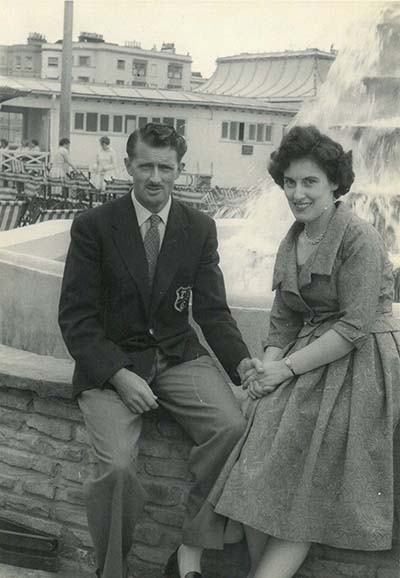
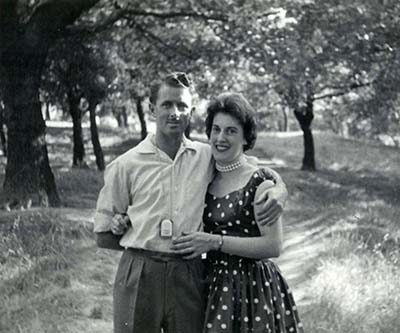
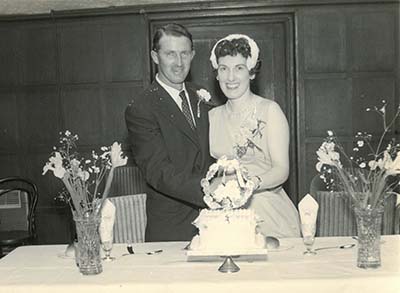
Helen and Jas were married in 1958 and we first met Jas on 18th October, 1959, the day after our wedding. We were booked in to a small hotel in Victoria, but Helen gave us a great time all through that week. I was so happy to meet Jas and know that Helen had married a very special person with whom she was going to spend her life loving and being loved. I can still hear Jas' voice, asking: 'Pet, may I kerry your baigue?'
Jas loved ice-cream and cream cakes and one day Helen was dressing him up as a gypsy and applying make-up when we heard the ice-cream van about four floors down from their flat. Jas just jumped up and tore down the stairs to catch the man and buy an ice-cream! Helen and I laughed! On our arrival, Helen had a lovely meal ready and she gave us each a plate with a cream cake on it and suddenly Jas called out, 'Pet, look at that huge spider!' Of course, I turned to look. There wasn't any spider but when I turned back, my plate was empty and Jas was laughing at the trick he'd played on me. That reminds me of the day in 2000 when Jas and Colin sneaked the cat into the house and Helen jumped up when she saw the cat and threw her slipper at the poor animal! Some time later I found a broken slipper in the waste paper basket! There was much laughter.
I guess lots more memories will come back but what I have written here is what I remember just now. Helen was one of the best and I miss being able to have those chats on the phone with her. She was the one member of the family who never once let religion matter. She greeted my marriage with joy and was friendly to Mike and she never once commented on the fact that Anna was adopted and she was so good to Anna and always so interested in her, calling her 'A M'. The family will all agree that Helen was loved by us all and that she loved us all. Whatever worries she had, she kept to herself. She and our mother sometimes had their differences but Helen was our father's obvious favourite. When our mother was dying, she said, 'There is only Helen to come now' and I said to her 'Helen is on her way. She'll be here soon'. When our mother drifted into a coma, I held her hand and told her Helen was there and she seemed to know what I said and be happy. It's at times like this that we feel the distance between us. Over the past year when we knew we couldn't go to see Helen for the last time there was so much I would have loved to talk about to her but she was unable to talk for long whenever I rang her and the last time was so sad because she was distressed by not being able to talk.
Once our mother said to me that she was sad she couldn't give us all the things our cousins had as there were six of us but that she loved every one of us so much that she wouldn't be without any one of us and I know she did. I told her that was more important than material things.To Helen and me our respective son and daughter were and are everything. Colin and Anna, go on flying the flag! Cherish those three wonderful grandsons of ours.
Helen, we miss you so much, but our memories of you keep you alive. I have the little book that Uncle Dick sent to his mother when Aunt Gladys died in 1929. It is called 'They Are Not Dead'.
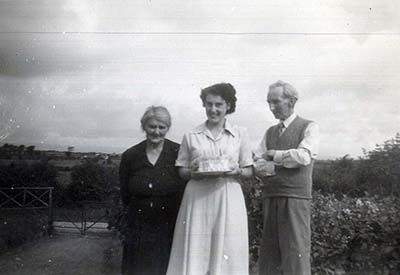
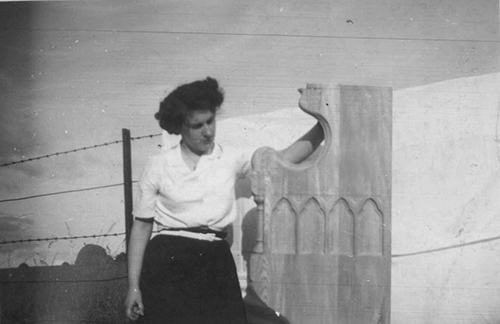
Here she is pictured holding prayer desks and seats that my father had made for St Canice's in Kilkenny: in memory, I think, of the Marquess of Ormond.