Tears and Laughter on the Orthopaedic Ward
Cannock Chase Hospital was opened in 1991, primarily as a geriatric hospital serving the local community. The wards were named after former coalmines in the area.
The hospital now boasts a first-class orthopaedic department. On the 26th November 2006 I checked in on Hilton Main Ward for a total knee replacement operation on the following day. I cannot speak highly enough of the treatment I received.
During my initial consultation with the surgeon he described the risks and what would be involved. He gave me three months to make up my mind. In March I decided to accept his offer. I had heard so many glowing reports of his skill as a surgeon and his commitment to his patients that I had every confidence in him.
My Pre-operative Care was reassuring. I was called in for assessment and tests and I found the staff kind and thorough and skilful. They work extremely hard, yet have time to smile and reassure the faint-hearted. A certain calm efficiency surrounds you and you feel that everyone involved is working for your well-being and safety.
Blood tests, ECGs, X-Rays and blood pressure readings with a review of the patient's past medical history ensure that when you finally have the operation, all risks have been minimised. Nurse Heather gave me a folder containing information about every aspect of the procedures facing me. She made an appointment for me to have digital XRays of the whole leg taken in Stafford and after a final blood test I was ready.
Once settled in my ward, I soon got to know my fellow-patients. The ward held four beds, and was bright and airy. I soon knew that we would be an inspiration to one another. There were those waiting to go home, those just over the operation and those about to go to theatre. There was much laughter and chatter. I found out that my operation was scheduled for the morning, so I had a good tea and late at night the nurse brought me two slices of freshly made toast and a hot drink. I would not eat or drink again till after the operation.
Next morning I was taken to the shower room and given clean hospital towels and face flannel and a disinfectant and a clean hospital gown and paper pants to put on. Back in the ward I read my book while waiting. The surgeon came and sat down with me and asked me how I was feeling. 'My tummy is tied in knots', I replied. 'I'm really scared.'
He placed his hand on mine and reassured me that he'd look after me. From then on I felt very much part of the team that would pull together. He went through the risks again and asked me if I was ready to sign the consent form. I willingly did so.
Then the anaesthetist arrived and he explained the options and the risks and told me the final choice was mine. I was happy to abide by his recommendation and agreed to an epidural but I asked to be put to sleep.
Soon afterwards two men dressed in green came, looking for 'Patricia'. The moment of no return was fast approaching! I opted to walk to the theatre with them, and their banter and joking put me completely at ease. The surgeon's assistant was there around my trolley and the anaesthetist and his two assistants. Needles and injections and talking and joking followed, till I felt myself floating away into oblivion. There was no sense of panic or fear.
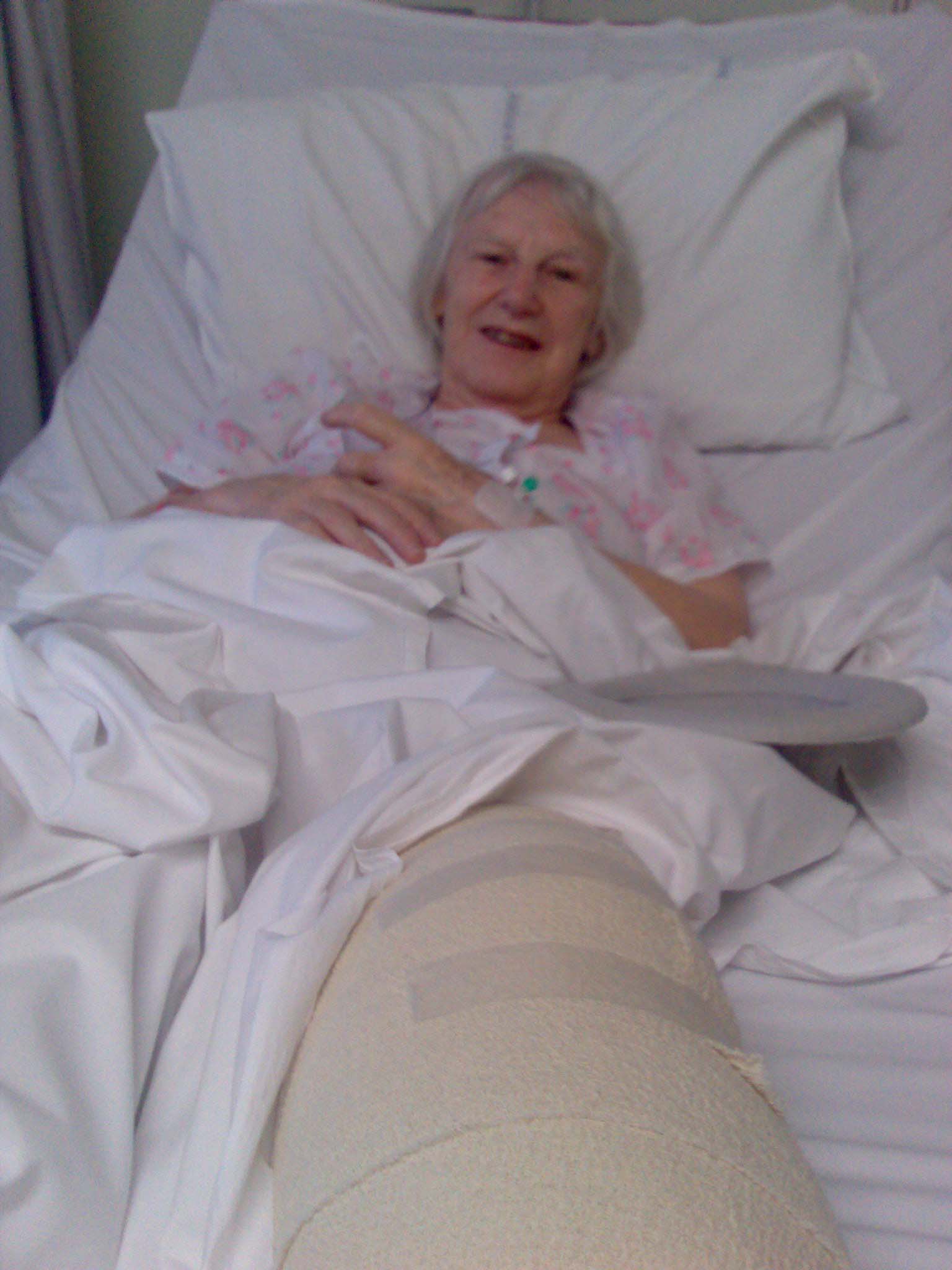
I woke up in the recovery room with tubes coming out of my nostrils and my leg swathed in a massive Michellin Man type of bandaging. There was constant monitoring all through the night in the Recovery room, and my husband and daughter briefly visited me. At one stage I felt a pain in my chest and I panicked but help was instant. I remember various doctors and nurses coming to my bedside and asking me questions and I was offered sips of water and told I could have a cup of tea whenever I felt like it. The anaesthetist visited me and next day the surgeon came and spoke to me about the operation and he said he would see me in two weeks' time.
I was taken next morning to a side room for further monitoring and that afternoon I was back on the ward. Next day I was helped out of bed and sat in a chair. I had a frame but the following day I was shown how to move on crutches. The physiotherapists worked hard and had me exercising and moving about in next to no time. That was quite traumatic as the pain was severe at that stage.
At no time did I worry about MRSA. I felt that every precaution was taken to eradicate any risk.
I am still enjoying excellent aftercare six weeks after the operation and I can't believe that I have made such progress. The people of Cannock can be proud of their hospital.
The surgeons and doctors and nurses and all the staff do a magnificent job, cheerfully and with dedication and compassion. They deserve more support and consideration from the Government. When I read about yet another cost-cutting scheme, I feel that the managers are putting budget considerations above the welfare of patients.