Abbeyleix
My Uncle Fred had bought an old Morris Cowley car in 1938 and he sometimes drove across to Durrow from Abbeyleix to visit us. He was a great storyteller. He was my father's youngest surviving sibling and he lived in the family home with my Uncle Charlie till their eldest brother died in London in 1957. My Aunt Mary then sold the house and both uncles came to live in England. Uncle Charlie ended up in Lincoln and Uncle Fred in London where he found work at an American base.
Uncle Fred was a painter and decorator by trade and he often did jobs for local people. He was a night bird and he loved to stay up into the small hours of the morning, chatting.
The day we moved from Durrow he drove us children to Abbeyleix and stayed with us till our parents arrived with the furniture. He taught us how to light a fire and we sat there waiting for our parents. Next day we excitedly explored our new environment.
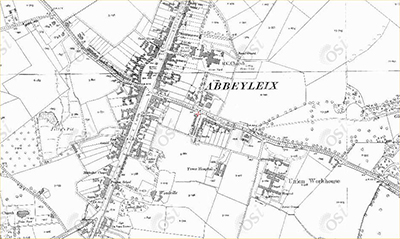
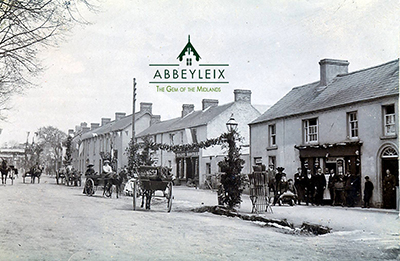
The house was situated a mile outside the town of Abbeyleix in Oldtown and it had once belonged to a cousin of my grandfather. 'Old town' was originally in the centre of Abbeyleix but the de Vescis then built the new town a mile away. The new house was a long, low building with a room built over each of the two end rooms.
My father used the ground floor room on the far left as his workshop and the room above as a store. The room to the immediate left of the hall door was the drawing room, reserved mainly for visitors. Then came my parents' bedroom and baby Margaret slept in a drawer in their room. On the far right was the bedroom where my two sisters and our brother Henry and I slept. Above us was Ted's bedroom. At the rear of the house was a built-on kitchen with a slate roof. The main building had a thatched roof and each year the thatcher came to renew the thatch. The rent was 7/6 (7 shillings and 6 pence) a week, a lot of money in those days! A long passage ran the length of the house leading to a toilet with an Elsan. The main toilet was a small stone hut in the field beyond the orchard and garden and it had a seat over a deep hole in the ground. This was disinfected after use with Jeyes fluid. Newspapers, torn into squares, served as toilet paper. We didn't have running water. Nor had rural electrification yet arrived. Water had to be carried in pails several times a day from a tap across the road. Oil lamps and candles provided lighting.
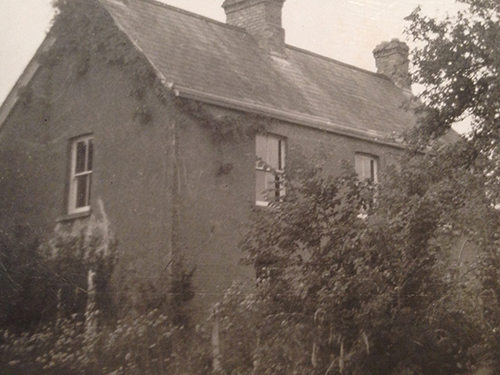
In the images below, the only remnants of the house still standing are the old kitchen. The house itself was a long low thatched roof cottage which came in the direction of the photographer in these images, along the remaining wall. In other words, it was an L-shaped property. The hallway had a single storey room on either side and then on each end (ie closest to the photographer and to the kitchen) there was a two-storey room. The workshop was the bottom room of the double storey nearest to the photographer with a wood store above. Ted had the upstairs room on the other end with the girls and Henry downstairs. My parents slept in the room to the right of the front door, beside the girls' bedroom.
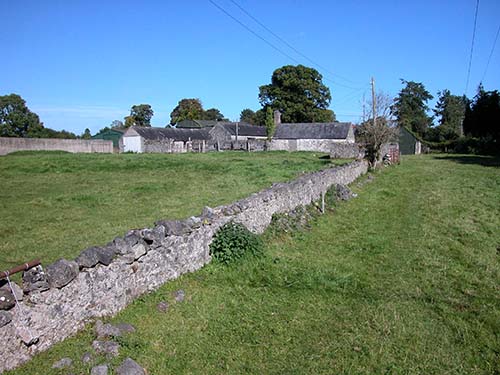
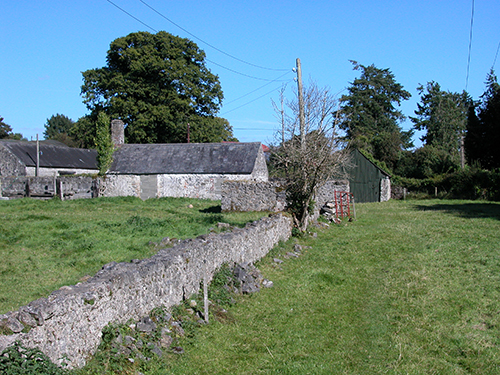
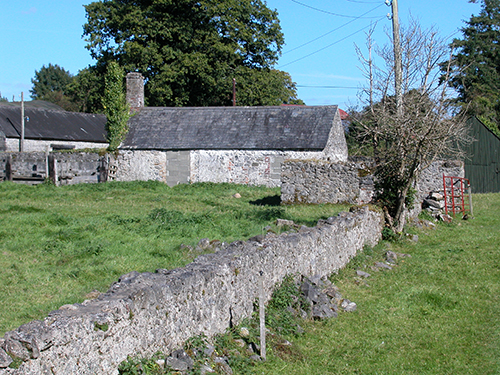

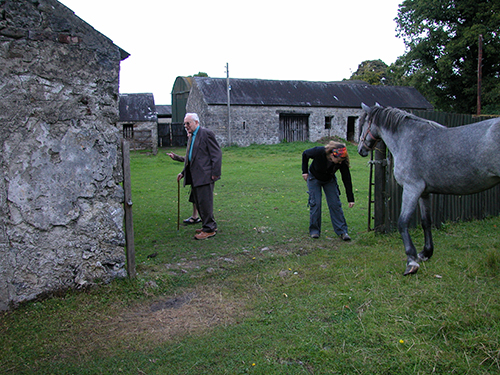
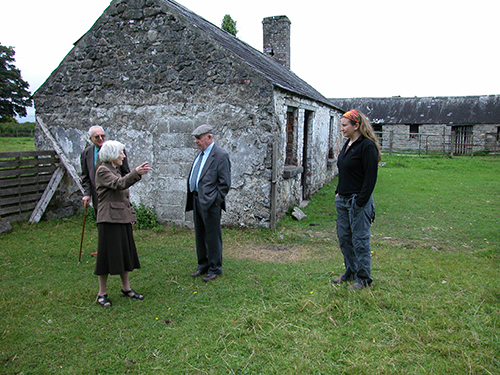
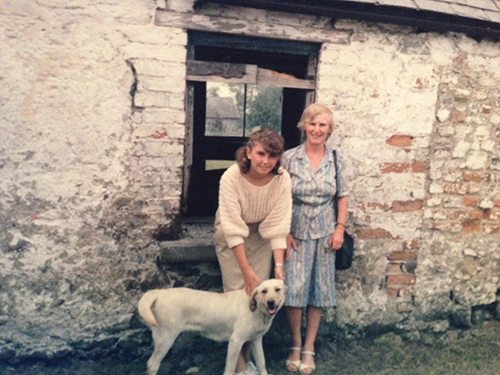
In the photos, the man climbing the style is Tod Bush, who is a relation through Will Childs / the Randalls (there was a Randall who was a line manager in the carpet factory in Abbeyleix) in America.). FYI Uncle Dick was Richard Randall Hartford and Uncle Eddie was Eddie Foster Hartford since the sons often had second names from the families who had married into the Hartfords but I never quite understood the connection.
In front of the house were extensive lawns with lots of trees and flower beds. A gate led into an orchard and garden to the left of the house.
This house was where I did most dreaming, out on the swing our father had made and hung from the tree by the gate between the front and the orchard and garden at the back to the left of the house. There are no photos of that but I'd look off into the horizon beyond the town southwards.
Later, my mother and father grew lots of vegetables and kept hens and bees for a while. I loved that house because of its space. The kitchen looked out on a farmyard and the landlord's son worked there. The landlord's wife was the head teacher in the little church school.
I remember our first Hallow E'en there. It was probably the only party celebration we ever had at home as children. The apples had been picked and laid out in rows on newspapers. The eating variety were russets. Our father organised the games. An apple dangled on a string and we had to try to secure a bite with our hands held behind our backs. I found it impossible. You opened your mouth and approached the dangling apple but it just moved away. Talk about having forbidden fruit dangled before one's eyes! The apple teased and tantalised but eluded capture. An easier feat was ducking for an apple in a basin of water - easier, that is, if you didn't mind submerging your face in water.
For tea we had a barm brack, a cross between a fruit loaf and a rich fruit cake, rather like Welsh bara brith. Hidden in the brack were several items of significance. Whoever found the gold ring would be the first to be married. A tiny piece of wood meant that your husband would beat you. A threepenny piece promised a rich husband while a tiny piece of cloth spelled poverty. Girls were the main targets for these four items. Young ladies at that time were brought up to believe that their future goal was the capture of a suitable husband!
Late in 1938 my father bought a mustard-coloured Morris Cowley similar to the maroon one that Uncle Fred owned. He paid £10 for it and it had a soft top and celluloid windows. It was started using a starter handle and turning the handle took strength and skill. One of my father's trips with Ted was to Dublin to collect oak timbers from Brooks Thomas in O'Connell Street, formerly Sackville Street. He parked the car outside the large store in the city centre and found himself in trouble with the law! A member of the Gardai Siochana was handing him a summons but my father pleaded that he was a poor country bumpkin, unaware of any parking restrictions. He was let off with a caution. His eyes used to twinkle as he told the tale afterwards!
The car was parked in the yard by the kitchen door. Ted learned to drive in that old car and I remember his running into the big doors of the farmyard having sent the hens running in all directions. He was to turn out to be a brilliant driver in later years. He was barely fourteen at the time. One day in the early summer of 1939 the rest of the family went off for a day in the car and I was left behind looking after Margaret in her pram. I sat outside the front door watching over her and I had two visitors, Archdeacon Nevill and a family friend. I guess the Archdeacon had been asked to drop by but the second visitor made me feel a bit uncomfortable so I decided to stay out in the open. Later, I went in and locked the doors. I fell asleep on a kitchen chair by the range and at nine o'clock the others came back and couldn't get a response to their knocking on the kitchen door. On peering through the window, they were horrified to see me bent over near the fire. It was a lucky thing I wasn't burnt.
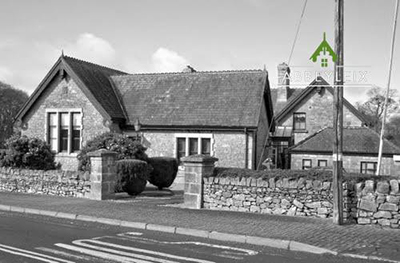
We had a mile to walk to the South School, the same one that my father and my uncles had attended.
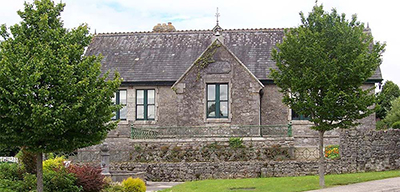
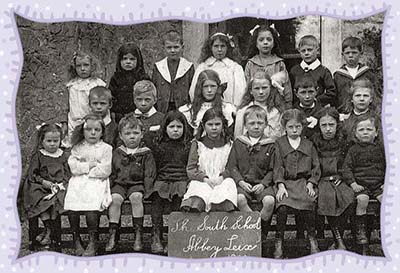
The girl in the centre on the middle row with loose hair was Martha Leigh, mother of George Welwood who was in school with Patricia and still alive at c. 90, in 2017, living oposite Sidney Pallin (although not coming out very much).
Pat's Aunty Fanny was behind her with the white ribbon in her hair. Aunty Fanny's twin, Uncle Charlie was separated from her by the girl with two white bows in the centre back of the picture.
Aunty Gladys, she thinks, was 2nd from left on the front row, with Aunty Aileen on the far left of the top row.
Uncle Fred was (maybe) 2nd from the left in the middle row. Uncle Henry and Uncle Dick should be in the picture, somewhere and the boy on the front row bears some resemblance to Hartfords too.
Uncle Eddie, Aunty May and Pat's father, William, would already have left school by then.
The car was parked in the yard by the kitchen door. Ted learned to drive in that old car and I remember his running into the big doors of the farmyard having sent the hens running in all directions. He was to turn out to be a brilliant driver in later years. He was barely fourteen at the time. One day in the early summer of 1939 the rest of the family went off for a day in the car and I was left behind looking after Margaret in her pram. I sat outside the front door watching over her and I had two visitors, Archdeacon Nevill and a family friend. I guess the Archdeacon had been asked to drop by but the second visitor made me feel a bit uncomfortable so I decided to stay out in the open. Later, I went in and locked the doors. I fell asleep on a kitchen chair by the range and at nine o'clock the others came back and couldn't get a response to their knocking on the kitchen door. On peering through the window, they were horrified to see me bent over near the fire. It was a lucky thing I wasn't burnt.
There were two teachers, Mrs Galbraith and Mrs Mitchell whose parents, Mr and Mrs Smith, had run the school in my father's day. There would have been about 30 pupils in total, ranging in age from 6 to 14. Mrs Galbraith was an inspiring teacher and I remember her mainly for the incentive to learn that she instilled in me. One day she told us that there was no such word as 'can't' in the dictionary and I couldn't believe that. I asked my mother to check her dictionary and we couldn't find the word. Then my mother explained to me what Mrs Galbraith was saying and I've never forgotten it. Another day she said that if the farmer left his plough idle in the field it would rust and if we didn't use our brains they, too, would rust! It was so different from the school in Durrow. I often recall learning off the names of the cotton and woollen industries towns - Leeds, Bradford and Halifax, Bolton, Bury and Rochdale. Many of the poems we learned by heart are still fresh in my memory, Young Lochinvar, Abu Ben Adam, The Old Woman of the Roads and many others. One subject we didn't study was Irish history after independence. It was as if we still lived as British citizens. We even had two times in summer, new time as displayed on the Church of Ireland (Anglican) church and old time, an hour behind, on the Catholic Church.
The church continued to play a large part in our lives. We attended Sunday school before the Morning service and half an hour each day was set aside for religious instruction in school. A placard was always on display, one side showing that secular instruction was in progress, the other denoting religious instruction. Once a year a team of clergy from other parishes in the diocese descended on the school and each class was examined on the syllabus we had studied over the year. We were awarded prizes according to our performance. There was a private Girls' School, Glen Ban, in Abbeyleix at that time and it was later relocated to Dundrum in Dublin. The girls seemed to us to be very stuck-up and one year they arrived at our school to take the Sunday School test with us, and their behaviour shocked me. When asked to recite the Lord's Prayer, they sat dumb, sniggering, and demonstrated that they considered this religion business beneath their dignity. They attended Morning service in the church each Sunday, dressed in their uniform and seated near the front of the church.
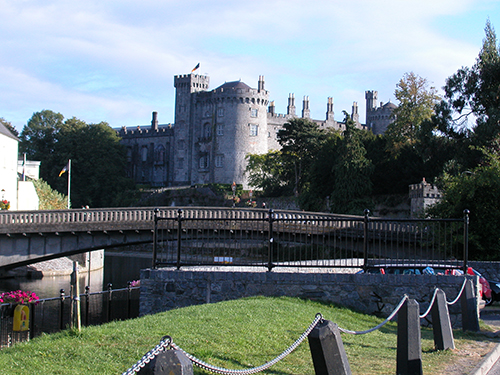
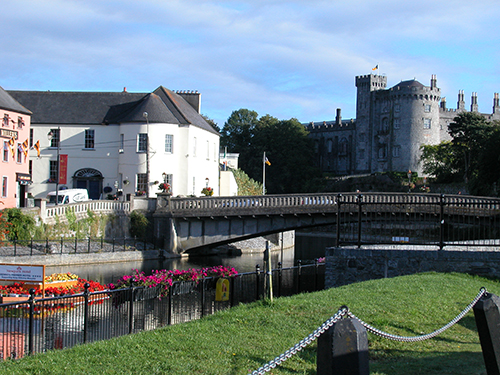
In the summer of 1939 we had a pleasant drive to Kilkenny to attend the Choral Festival in St Canice's Cathedral. Mrs Galbraith had said that if we brought in some material she would cut out a dress and show us how to sew it together. It would be a lot more interesting than stitching samples of hemming, running stitch, back stitch, top stitch and so on. The buttonholes were worst of all. How I hated sewing! While in Kilkenny, my mother took us to a draper's shop, owned by a friend of my aunt's and she bought a length of yellow floral patterned cotton for sixpence (6d) a yard. The material ended up as a homemade, hand-stitched dress, which I wore.
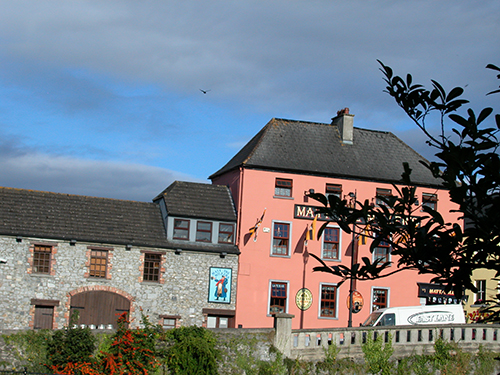
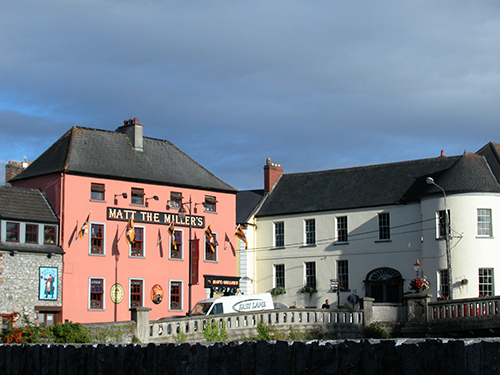
One of the shops frequented by our mother was Wilkinsons'. Mrs Wilkinson ran a group called Busy Bees, a junior branch of the Mission to the Jews and we went to her house once a week to a meeting. She gave us a bowl of soup to begin with and it was a pleasant outing for us. She belonged to the Methodist Church and at that time there was a Methodist Minister in residence in the Manse. He was the Rev Ritchie and his three sons were in school with us.
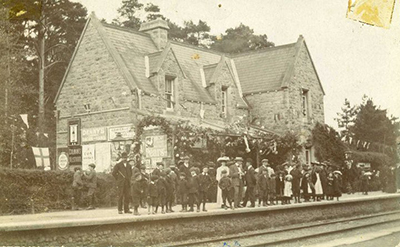
Opposite the South School was the station. The train from Dublin to Waterford via Kilkenny stopped there and every Thursday was excursion day when a return fare cost the same as a single on other days. Occasionally, especially on Christmas Eve, my father would take me with him to Kilkenny on a little shopping spree.
My mother's sister, our Aunt May Shekleton, was Assistant Matron in the mental hospital in Kilkenny and she used to come to visit us on her day off on a Thursday. She always came laden with bags containing presents for all of us and food for our mother. We used to walk through the de Vesci demesne to the station to meet her off the train and help her carry the bags. We could scarcely wait to find out what she had for us. I remember the three pixie caps she brought for Helen, Muriel and me. Mine was blue, Helen's green and Muriel's red. We wore them even when we went to fetch water from the tap across the road.
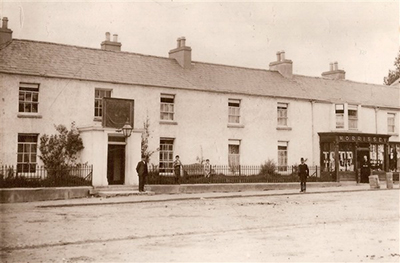
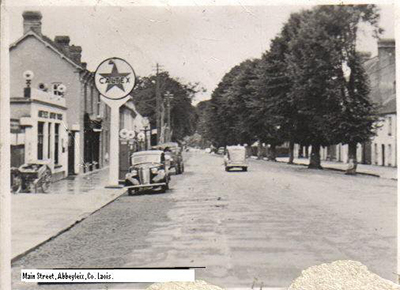
Every evening after milking time we walked to Mrs Galbraith's with our gallon can and paid her for a pint of milk but the can was filled to the top! We had no refrigeration in those days and my mother would boil the milk and place it in a large jug with a lace cover and store it in the larder. Meat was kept in a safe, sprinkled liberally with pepper and vinegar, to protect it from flies. Abbeyleix had lots of flies and there were sticky flycatchers in every room, a horrible sight! We were fortunate to have a shop next door, which stocked all sorts of goods from groceries to coal and paraffin oil.
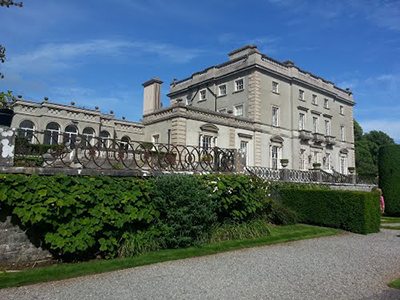
On the de Vesci estate was an old church with effigies of a former lord and lady. During the summer months there was a Friday evening service at 6 o'clock there and on Christmas morning there was an early Communion service which our parents went to while we stayed in bed opening our Santa presents.
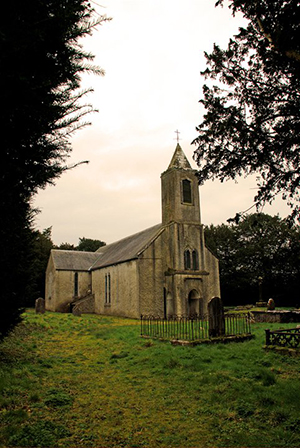
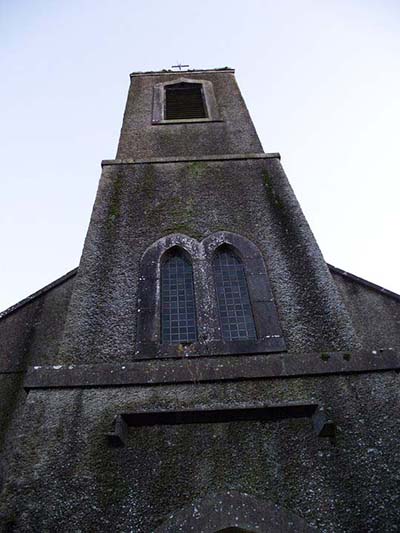
It was a pleasant walk down to the old church and on the way we passed Millbrook, the FitzHerberts' house where my mother had been a parlourmaid till she eloped with my father in 1917.
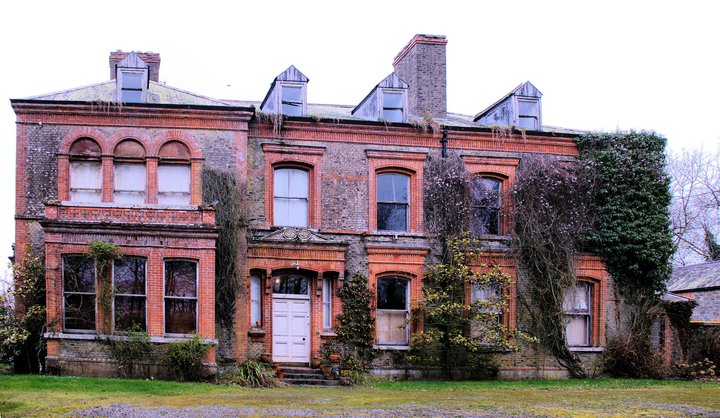
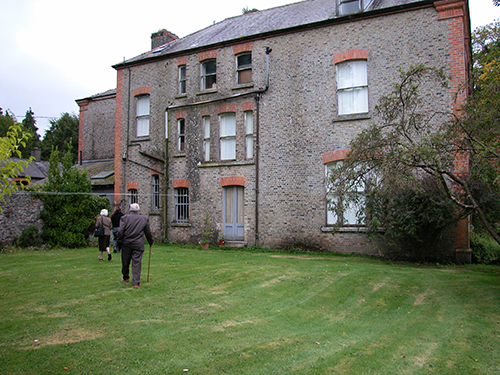
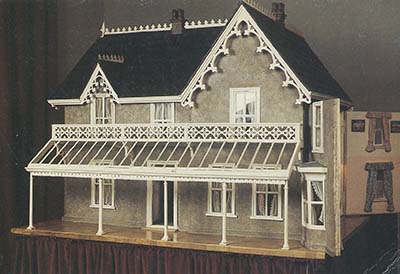
The church was next door to the cottage house that my grandfather used as his office and where my father served his seven-year apprenticeship under his father. My grandfather was the last clerk of works (resident carpenter) for the de Vesci estate. He could have used the house as his home but, because he had Fordville, down the road, he just used the cottage as his office. This house was the model for the Doll's House on display in Longleat, home of Lord Bath. When my father finished his apprenticeship, he went off to join the Kilkenny Woodworkers, and then he eloped with my mother, joined the airforce in England while she worked in a house in Chingford and then when he returned, he worked first in County Wexford and then became the carpenter on the Bessborough estate in a similar position to that which his father had had with the de Vescis. The hunting lodge that I was born in came with that job. All the children, apart from Margaret, were born there and that is the place shown with the steps where the different generations stayed.
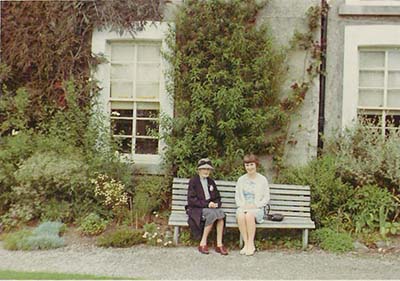
Our father's old home was about ten minutes walk up the road from us and we loved visiting Uncle Charlie there. I enjoyed tinkling on the piano, although it was very much out of tune. The piano stool was round and beaded. A big family Bible stood on a table and it had entries for all the births. I often wonder where that Bible went but no one in the family can throw any light on the question. On the mantlepiece stood an ornate clock under a glass dome. Before he died in 1982 Uncle Charlie asked me to collect the clock from Eddie Millar, a friend of his in Abbeyleix, and when I brought it back to England he said I could have it. Recently I had the clock restored and repaired and it is strange to see it now and hear it chime on my sideboard.
We were scarcely a year in Oldtown, when World War 2 broke out in September 1939. Everything was to change from then on.
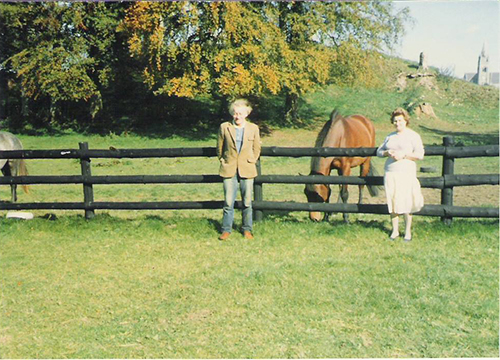
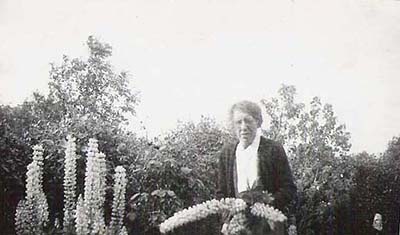
This is a photo taken of Mr and Mrs Casserley, the vets, in Abbeyleix. Helen knew Mr Casserley's brother who was a farmer in Whakatane. She had met him when she was doing a farm management course. and he had told her about his brother who was a vet in Abbeyleix. The son is now the vet there.
This is a photo taken of Mr and Mrs Casserley, the vets, in Abbeyleix. Helen knew Mr Casserley's brother who was a farmer in Whakatane. She had met him when she was doing a farm management course. and he had told her about his brother who was a vet in Abbeyleix. The son is now the vet there.